Gaming News
- Game Informer
- Error

This week and weekend is all about the remake of The Legend of Zelda: Ocarina of Time, one of the few games I feel deserves the title of masterpiece. And the remake is really well done! I got every heart piece, every Gold Skulltala, the Goron Sword, and the biggest pouch for every one of my items over the course of the review... but I am contemplating jumping right back in for another go.
We also revealed our next cover and in case you missed the announcement it is... pause for effect... Tomb Raider: Legacy of Atlantis! It's an awesome cover that celebrates the history of Lara Croft, and along with a cover story on the game, we also have a big retrospective on the series. I highly recommend subscribing to get your issue if you haven't already.
But it wasn't all just Zelda and Tomb Raider this week. Below you will find a list of weekend play recommendations, but before that... some of our biggest stories of the week.
Cover Reveal – Tomb Raider: Legacy Of AtlantisZelda Ocarina Remake Producers Talk Changing And Maintaining The Game, Easter Eggs, The Bombchu Bowling Alley Operator, And MoreThe Zelda: Ocarina Of Time Easter Eggs That Did And Did Not Make It Into The 2026 RemakeThe Switch 2 Pro Controller Can Make Zelda: Ocarina Of Time Even BetterThe Legend of Zelda: Ocarina of Time (2026) Review – Exceptionally FamiliarGod Of War Laufey Delayed To May101 Rapid-Fire Questions With Exodus Devs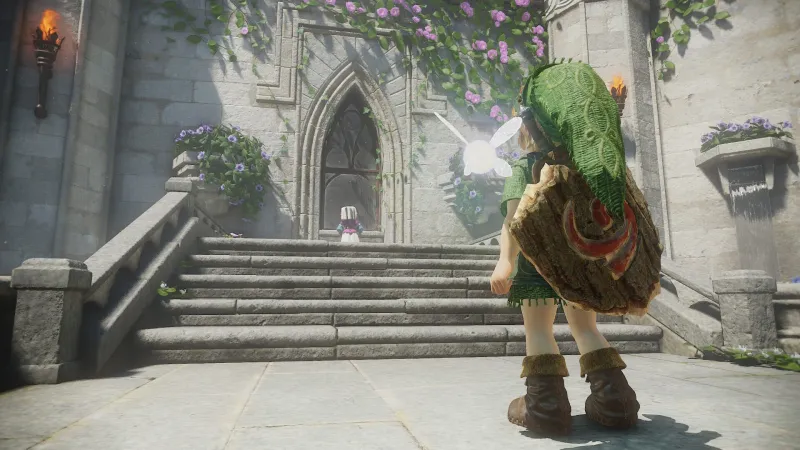 The Legend Of Zelda: Ocarina Of Time (2026)
Kyle Hilliard
We have been writing a lot about The Legend Of Zelda: Ocarina Of Time remake this week because it is one of 2026's most exciting games, and it's real good. The remake is not particularly surprising. It mostly sticks to the trajectory of the original game, but there is a reason it is considered one of the best games of all time. It also looks and plays amazing.
You can read the full review here (or watch the video above), but we also have a big interview with the game's producers (one of whom worked on the original Ocarina of Time, and one who directed Breath of the Wild among many other Zelda games), some details about the Easter Eggs that did and did not make it into the remake, and a very handy tip for the game if you happen to be playing with a Switch 2 Pro controller.
 World Of Warcraft: Forever
Alex Van Aken
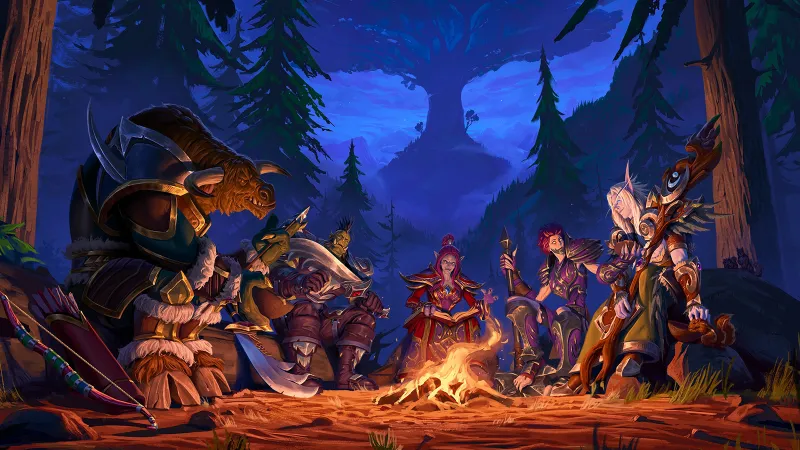
World of Warcraft: Forever is out now and it’s a great time to jump into the revamped and expanded version of a project that changed online games forever back in 2004. A thousand new quests, multiple new zones, countless revamps, and an impressively stunning visual overhaul make it the perfect time to jump in for anyone who’s ever been curious to explore Azeroth.
 Escape Academy 2: Back To School
Kyle Hilliard
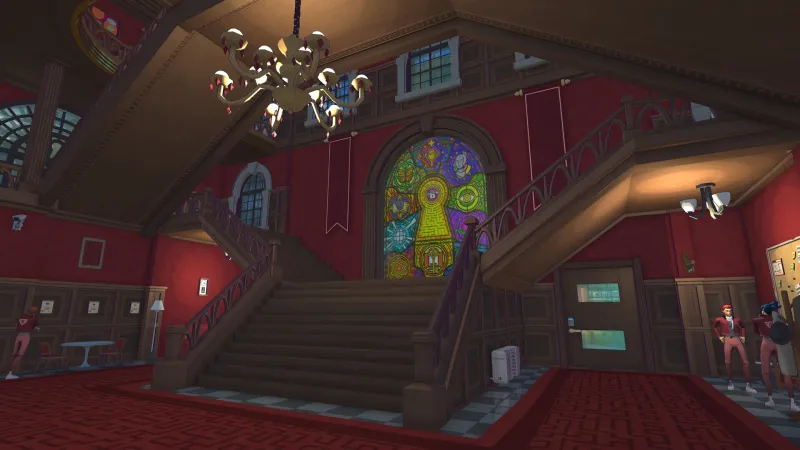
2022's Escape Academy was a sneaky little puzzle game that surprised me and its sequel released this week. Taking place in a school obsessed with puzzles, you play as a student who must make their way through a series of escape rooms. The puzzles are clever, and the setting is charming, but the secret weapon is the local, split-screen co-op. Solving puzzles together is fun especially when one player needs to look at one section of a room to help dictate a solution on the other side of the room. My wife and I both love video games, but rarely play co-op games together just because of our disparate, individual tastes. But Escape Room is one we enjoyed together and we're so far enjoying the sequel. My only complaint so far is... I wish it ran a little better.
 Moadra
Matt Miller
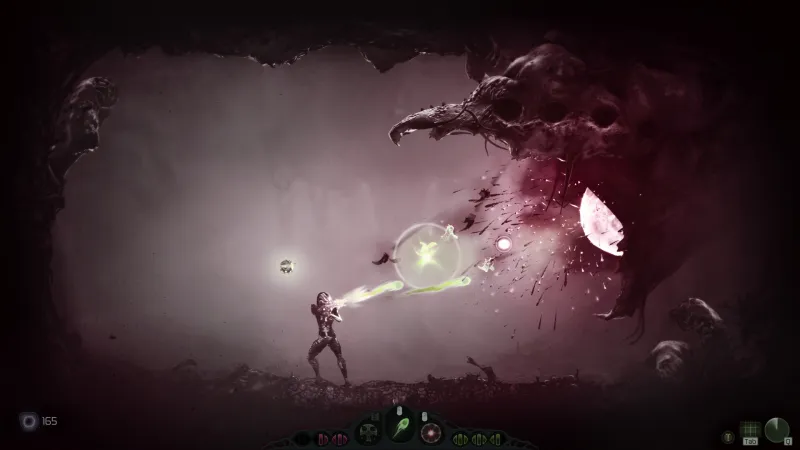
While we collectively use the term here for the sake of familiarity, I’m always a bit hesitant in my own mind to label a game under the wide banner of “Metroidvania.” In part, that’s because I think the two referenced games (Metroid and Castlevania: Symphony of the Night) are actually more different than they might appear at first glance. Gloomsoft’s recent release, Moadra, recognizes that distinction, crafting a game that draws heavy inspiration from the specific tradition of Super Metroid, even while presenting an intriguing and atmospheric fiction that is great fun to discover. In movement, actions, and exploration, Moadra feels remarkably similar to the best of the 2D Metroid games. A scanning tool also leans into the Metroid inspirations, revealing details about the weird alien world you’re navigating. If you’ve been hungry for a game that scratches that particular itch of sci-fi gear/ability-gated exploration, I think you’ll find a lot to love in this game.
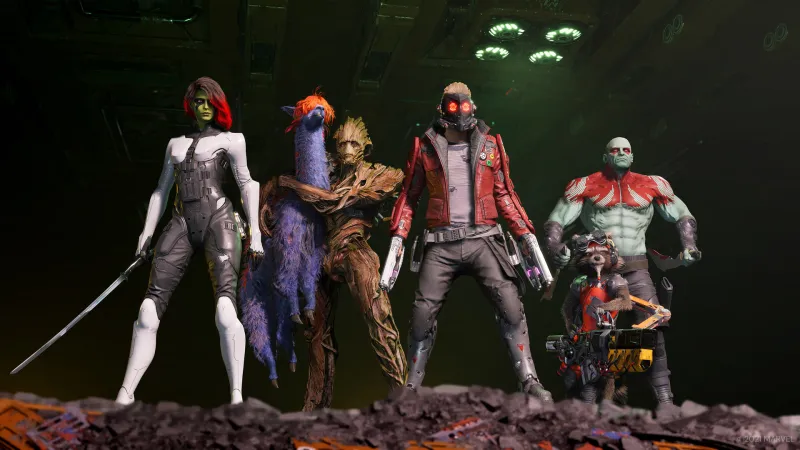 Marvel’s Guardians Of The Galaxy: Encore Edition On Switch 2
Kyle Hilliard
I get the Marvel fatigue we've all been experiencing. There are a lot of games and a lot of movies and a lot of TV shows and many are good, but lately most feel like homework. For those reasons, you'd be forgiven for dismissing the 2021 Guardians of the Galaxy game, but I promise you it is good. For one, it is standalone. It does not directly tie to any specific Marvel media. No homework necessary. And for two, it's just a really good game with an affecting story and a unique take on the characters that most of us met for the first time in the movies. And, for the BioWare fans out there mourning the loss of Mass Effect, this game has some Mass Effect energy. It's available on Switch 2 this week and I happily recommend it, especially if you missed it five years ago.
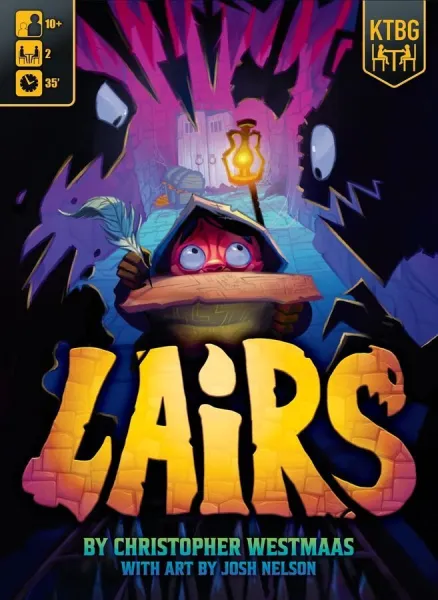
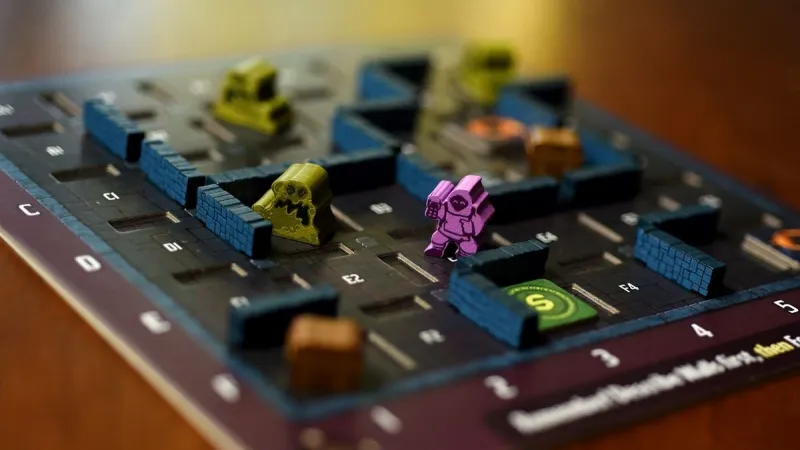 Tabletop Pick – Lairs
Matt Miller
This exclusively two-player board game features a fun mix of activities. You act as both a dungeon architect, and an adventurer delving into said dungeons. Each player creates their own version of a challenging dungeon filled with traps, monsters, and treasures.
But you’re also forced to take on the dangers of your opponent’s crafted dungeon, to see who manages to come out on top. If you have fond memories of the hidden-info nature of old games like Battleship, but you want some greater strategic depth and fantasy flavor thrown in, this one is a great pick.
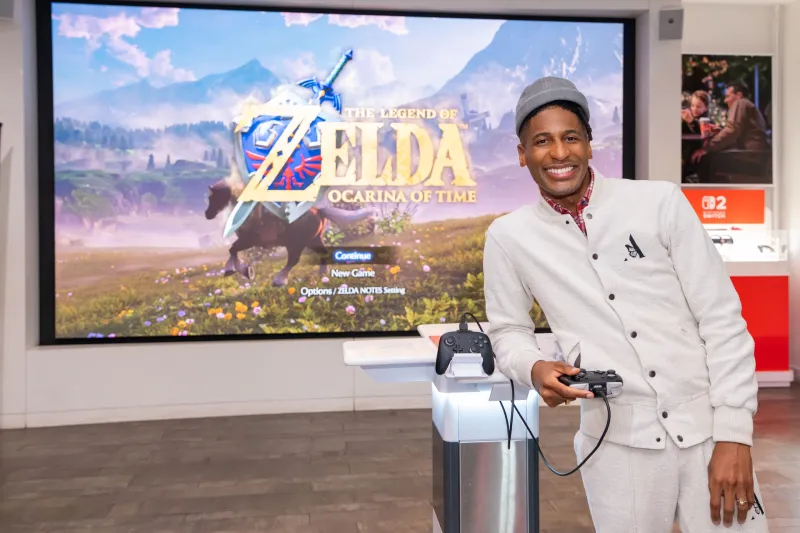
Jon Batiste has collaborated with the likes of Alicia Keys, Lenny Kravitz, Prince, Stevie Wonder, Willie Nelson, and many more. He performed the national anthem at Super Bowl LIX. He's headed up the musical efforts of The Late Show with Stephen Colbert. He's taken home more awards than we can realistically list in this article (including eight Grammys, as well as an Academy Award, a BAFTA Award, and a Golden Globe). But as I sit down with Batiste for a brief conversation about video game music, his energy transcends the Zoom call.
Before I can even ask a question, Batiste begins singing to greet me, then nerds out about my NBA Jam and Street Fighter II cabinets. He begins humming the menu music from NBA Jam and reminiscing about all the quarters he pumped into his local Street Fighter cabinet. The Louisiana native and Juilliard School alum has been an ardent gaming enthusiast for nearly three decades, with compositions from games like Sonic the Hedgehog and Final Fantasy VII inspiring his earliest musical endeavors. Spend enough time watching video game music performances on social media, and you'll likely soon find videos of Batiste sitting with famed Final Fantasy composer Nobuo Uematsu, or of Batiste performing gaming music.
With The Legend of Zelda: Ocarina of Time delivering some of the most iconic music of all time (and Batiste famously loving the music), it makes sense that Nintendo would bring him out to New York to serve as a special guest at the launch event for the Legend of Zelda: Ocarina of Time remake on Switch 2. I sat down with Batiste for a few minutes to chat about his love of video game music, his history with Nintendo, and why "Guile's Theme" from Street Fighter II just goes so well with everything.
Ocarina of Time is easily one of the most important video games ever made, and one of the things that makes it so special is the music. What about Ocarina of Time sticks out to you sonically?First off, if you want to get super inside baseball, technical music nerdery, which I love to do, in the compositions, there's a way that major chords and minor chords in... no sevenths, just root, third, fifth. They alternate, and it creates this magic that is, like, it's wistful, and it's simple. It feels ancient, and it feels like it's the music that is going on in your mind as you're generating thoughts and your imagination is churning. And the major chords are happening just after the minors in this contrary motion that's happening, so it feels like the music is going like this: It's going up – major, minor – like [sings the main Legend of Zelda theme song].
So, it's expanding and contracting, which is a musical allegory for the expansion and the openness of the world that Link is in. It's like [Koji Kondo] figured out how to capture the essence of the gameplay, but also the essence of magic and simplicity, which I think is really what makes... that's the music's power! So, you could listen to the music in the game, and you could also listen to it apart from the game and experience that magic.
Are there any tracks in Ocarina of Time that stand out to you as the most musically sophisticated or compositionally impressive?Oh man. Well, I think of it as a suite, so that's what makes it actually... there's nothing that's more or less complex, but the thought to figure out how to make all of the themes be interrelated yet singular. "Song of Storms" is, like, for me, that's a personal favorite. That's why I like to play it. I like to play a lot of the themes. That's how I grew up! I would play the game, and then, I would go to an instrument. Once we played for hours on Nintendo, we'd go and play Nintendo on piano! It was like a trade-off there, you know? I've been doing this since I was about 11 years old.
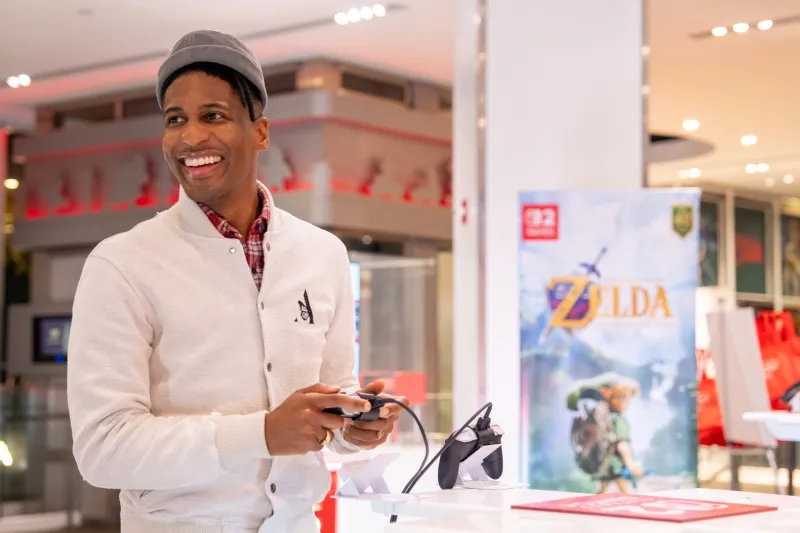
Taking it back to that 11-year-old Jon, talk to me a little bit about your history in general.Okay, so my history with Nintendo goes back to the NES. Christmas morning. Duck Hunt. You remember that? Maybe the first game I ever played. No, the first game I ever played was Donkey Kong, and then Duck Hunt, and then Super Mario Bros. Staples! We're talking about the early '90s. We had a room where I would go – it was my domain – and we had this blue shag carpet, and I would sit back there, and I would basically disappear into the carpet playing Nintendo for hours and hours.
And my mind is kind of... my mind can become a spiral; it can become a tornado. And I realized even then that going into this world of the game, even if I didn't win – it's not about winning or losing – it helps to organize the spiral of my mind and give me ideas and inspiration. So then, I started to get into Street Fighter II when I started to play more communally with my sister and my cousins. Yoko Shimomura, who I also had the pleasure of meeting and collaborating with, she composed incredible themes for each character, and that's when I really started to get a true love for fighting games.
And then, we would play so many of the Street Fighter franchise. We would play a lot of Final Fight. There were so many things... there was Double Dragon, then we got Mega Man... all these different series. Mega Man X is [an] all-time favorite. And then, here comes The Legend of Zelda: Ocarina of Time, and that sort of expands the canon while also blending all of the elements: score, combat, the sort of linear quality of, like, a Donkey Kong or Super Mario World, and expanding the world in that way, expanding the canon in that way. Mind-blowing! So, that sort of solidified my palate in terms of my favorite type of game.
You mentioned Street Fighter II. There's a meme about "Guile's Theme" and how it goes with everything. What about that composition makes it so it has the ability to enhance whatever video you pair it with?Wow! So, it has momentum in a way that is extremely [sings the melody of "Guile's Theme"] ... It draws you in, which is what you want [with] anything that you're starting when you're commencing a journey or watching something. You want it to draw you in, and that kind of pulls you in as that call and response. But it's an immediate announcement with the brass, and then the bass call and response. So, it's automatically giving you this feeling that something's happening, and I've got to pay attention to it! So that's the first step right there. And the tempo is really... it's a great tempo! It almost has the feeling of the great themes from, like, an '80s protagonist that's in a fighting movie. I think that was kind of the archetype. Yoko was probably drawing from that archetype, right? The action-hero archetype.
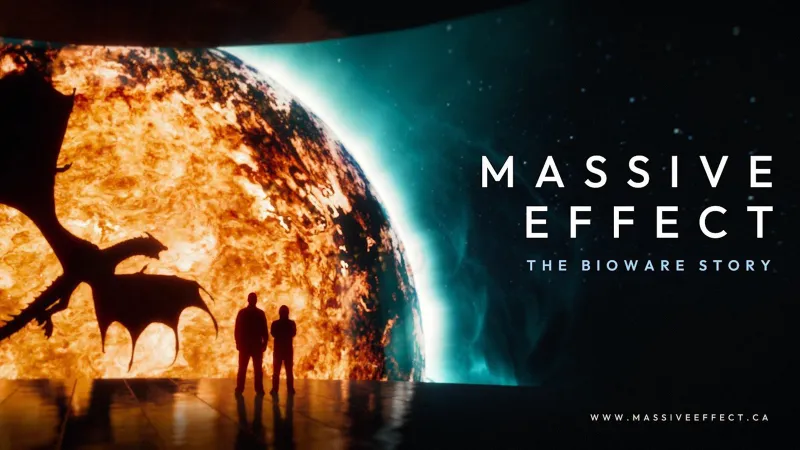
A documentary is on the way, titled Massive Effect: The BioWare Story, will track the studio from its creation to its last two years. According to IGN, the documentary is produced by Shane Fennessey and Adam Scorgie and is being made for Canada‘s Super Channel and will release some time next year. BioWare was based in Edmonton, Alberta, Canada.
Geoff Keighley shared a few additional details about the upcoming documentary and confirmed his involvement as an interviewee.
Next year, the story of BioWare will be told in MASSIVE EFFECT: THE BIOWARE STORY, a new documentary that chronicles the history of the company and its sad closure by Electronic Arts. I was honored to be interviewed for it earlier this year. https://t.co/928LPZWK7H
— Geoff Keighley (@geoffkeighley) November 5, 2026
Late last month, news broke that EA was shuttering BioWare, the studio behind Mass Effect, Dragon Age, and more. Following the news, a work-in-progress teaser trailer leaked sharing what the team had been working on. Ea reportedly closed BioWare in favor of pursuing more Star Wars projects, which you can read about more here.
For Game Informer's own documentary of sorts, you can read our expansive oral history on the studio which covers its inception up to about 2016.
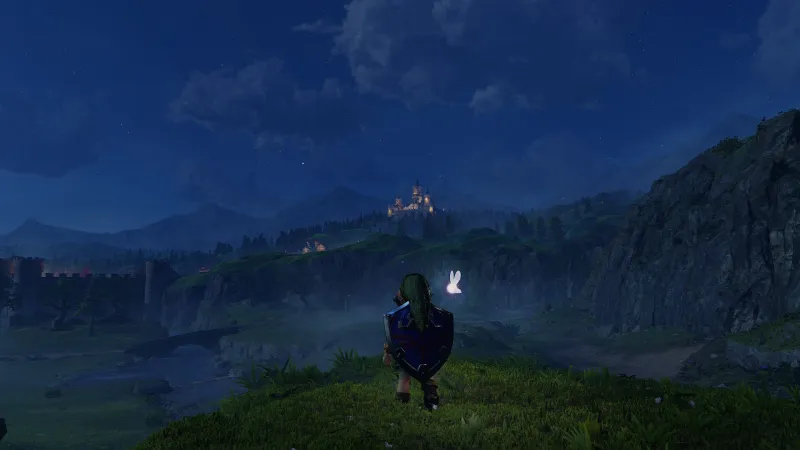
The Legend of Zelda: Ocarina of Time hit Switch 2 today, and, as Kyle Hilliard pointed out in our review, it is pretty excellent. Along with its remarkable visual upgrade, the new Switch 2 remake of Ocarina of Time adds quality-of-life improvements and modernizes the control scheme. As part of that, Nintendo has added the ability to jump and sprint. While that works well to make the game feel new, I quickly realized it sometimes clashes with another new improvement: a free camera controlled by the right stick. Holding down the sprint button to get through areas as fast as possible can make it tricky to keep the camera where you want it, but thankfully, if you have the Switch 2 Pro Controller, there's an easy fix.
After hours of running around, I was awestruck by the level of detail and updates, but I found myself constantly fighting with the camera, or at the very least, needing to take a strange claw-style grip to be able to direct the camera with the right stick, while holding down the A button to sprint. If you're a casual Switch 2 player, you might not have even noticed the back buttons on the Pro Controller, or you just have no idea what they do. Those buttons can be remapped on a per-game basis and it's a simple process. Everyone has their own preferences, but, for example, for high-mobility shooters, I like remapping one of those to reload and one to jump. I've never felt the need to remap in a Zelda game, but after feeling the need to do so with The Legend of Zelda: Ocarina of Time on Switch 2, I might do so going forward.
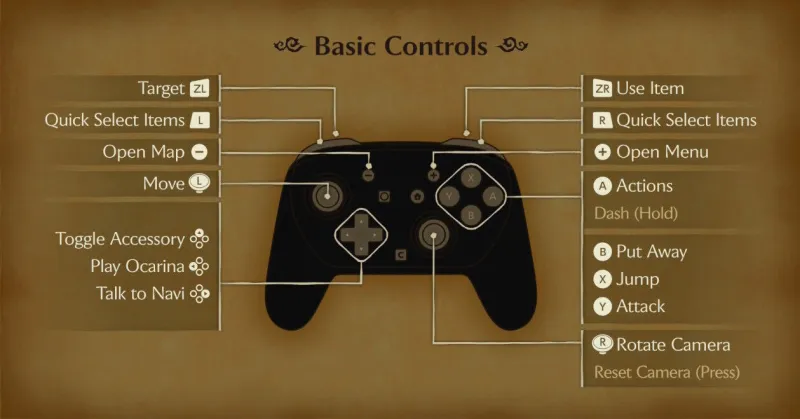 The default in-game controls for The Legend of Zelda: Ocarina of Time on Switch 2
Remapping Your Switch 2 Pro Controller For Ocarina of Time
If you, like me, struggle to comfortably steer the new free camera while running through hallways, towns, dungeons, and, yes, Hyrule Field, you might want to consider remapping your controller. As you can see in the above image, the placement of Jump and Dash on the face buttons can make it difficult to simultaneously control the camera and sprint. This isn't typically a problem in most modern games, as clicking the right stick is often a toggle to sprint, but in The Legend of Zelda: Ocarina of Time for Switch 2, you need to hold the button.
If you have the Nintendo Switch 2 Pro Controller, copying one button's functionality to the buttons on the back of the controller is simple. All you need to do is hold the Home button on the Switch 2 Pro Controller for a moment until the Switch 2 system menu appears on the right side. Along with Power Options and any Bluetooth audio devices you have available, there is also the option to map GL and GR, the controller's back buttons on the left and right, respectively.
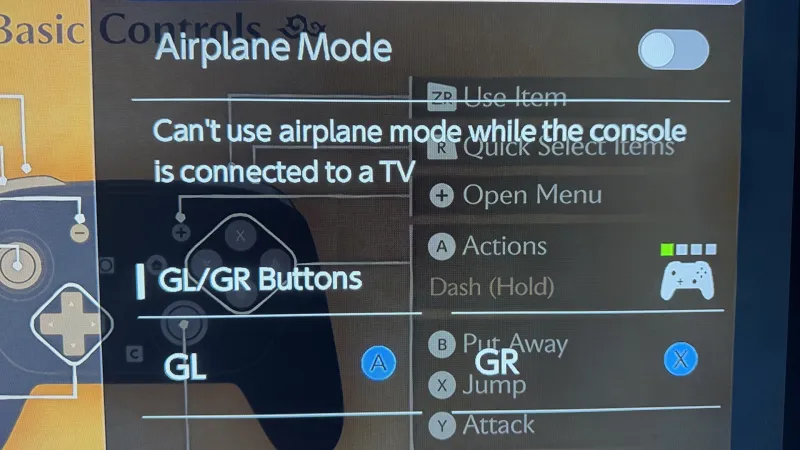
Navigate down the menu to the GL and GR, then select which one you'd like to map. It will ask you which button you want to assign to the one you selected. Everyone can choose whatever makes sense in their own head, but mapping A (Roll and Dash) to GL and X (Jump) to GR made the most sense to me. Now, while I'm using the Switch 2 Pro Controller, I can use my middle finger to hold the GL button to Dash around without removing my thumb from the camera-controlling right stick.
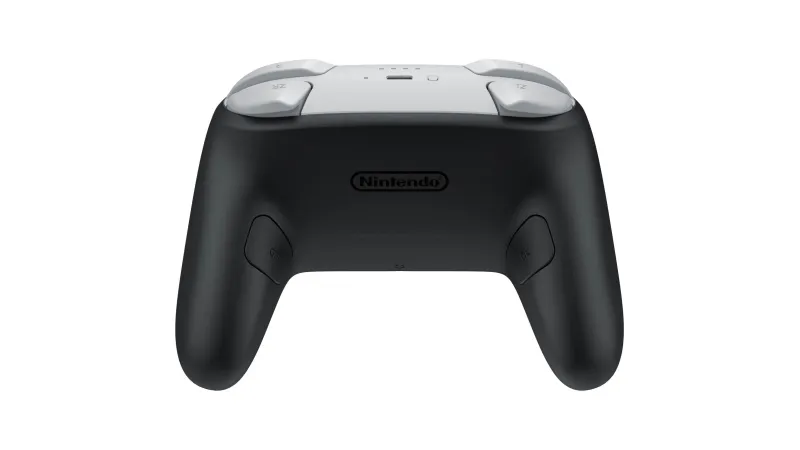
And the best part is that, since you're not removing the functionality of the A or X buttons, you can still use them when it makes sense. For example, A also controls actions like opening up a treasure chest or door, and in my head, that feels like a face-button action, whereas rolling and dashing feel right mapped to the back buttons. The only downside is that, since this functionality is new for Switch 2 Pro Controllers, it isn't available if you're using the Joy-Cons or a Switch 1 Pro Controller. Also, it can make switching over to handheld mode challenging, as you don't have access to the back buttons in that play style.
Even if you don't have the ability to take advantage of this tip, either because you don't own a Switch 2 Pro Controller or because you prefer playing in handheld mode, you should still absolutely play the Switch 2 remake of The Legend of Zelda: Ocarina of Time. To learn more about the experience and why it's a must-play, head to our review.
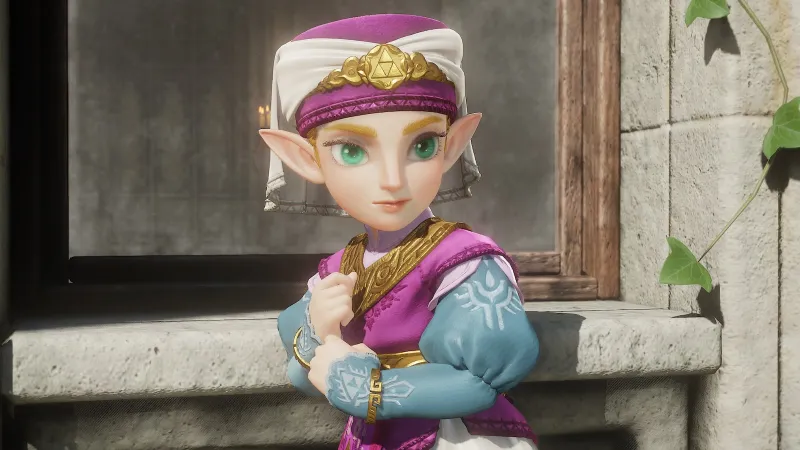
The Legend of Zelda: Ocarina of Time for the Nintendo 64 is a game full of Easter Eggs, secrets, and hidden mechanics (did you know if a butterfly lands on your Deku Stick, it summons a fairy?). Now in its second remake, not every secret has made its way forward through the previous iterations, but many have. Below you will learn about a few of the secrets that made the cut, and others that didn’t.
No More Nintendo Character Portraits Near Zelda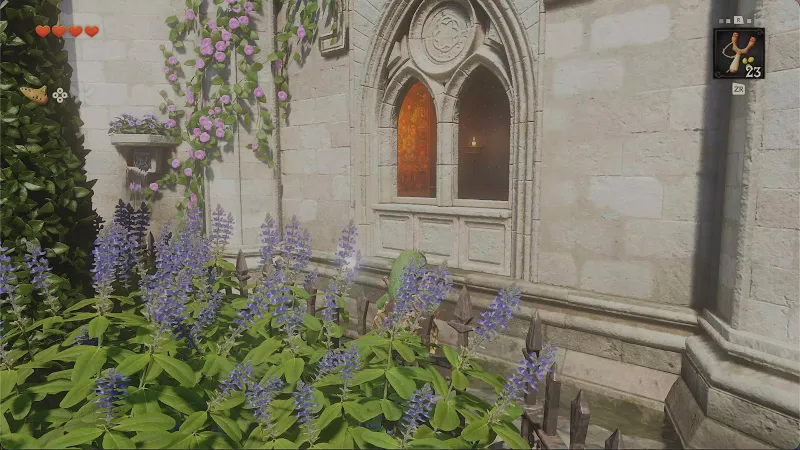
In the courtyard where Link first meets Zelda, there is arguably the most fourth-wall-breaking Easter Egg in the whole game. If you don’t rush to Zelda and instead pause and enter first-person to look around, you will see portraits of other Nintendo characters through the windows, like Mario and Yoshi. In the 3DS remake, the portraits are replaced by an image of a Mario stage.
For the 2026 remake, there are no references to other Nintendo characters. Instead, the tapestry you build over the course of the game is on display. Removing the reference to Nintendo characters outside of the Zelda universe is understandable, but it is a little odd that art representing the full adventure of the game – an adventure that has not yet concluded – is on the wall.
There Is Still A Guard You Can Annoy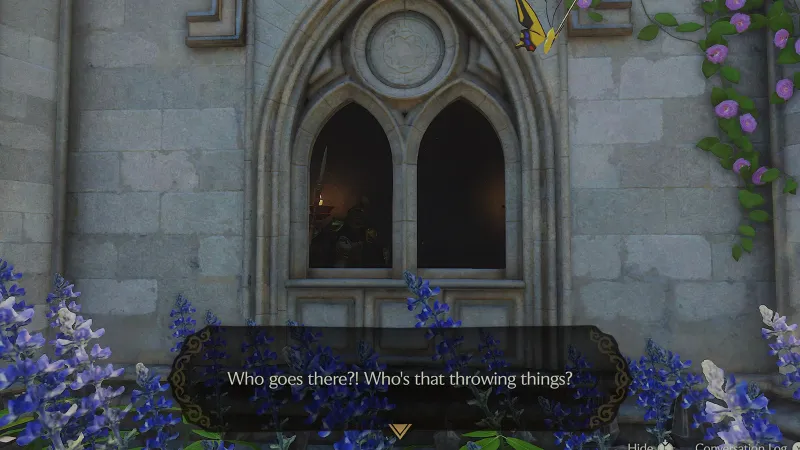
As stated above, the Nintendo character portraits are gone, but there is still a guard you can annoy. If you fire a Deku Seed into the left window, a guard will pop out, yell at you, and then throw a bomb at you. You can’t pick up the bomb. In fact, at this point in the game, you haven’t even seen a bomb.
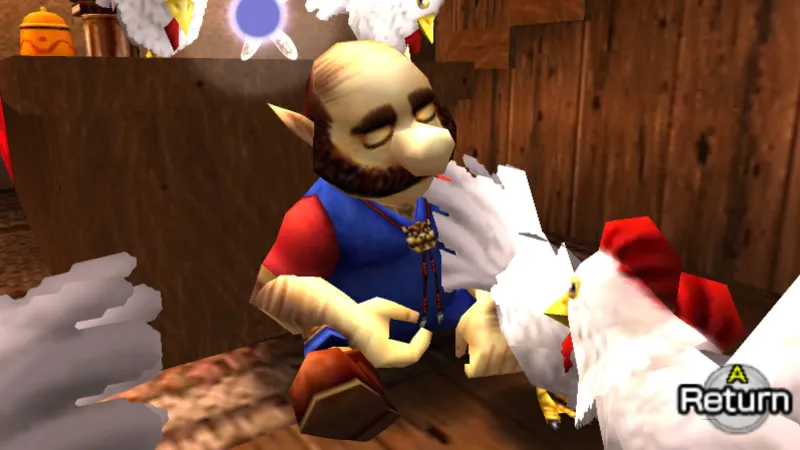
Malon And Talon Still Sport Bowser Clasps
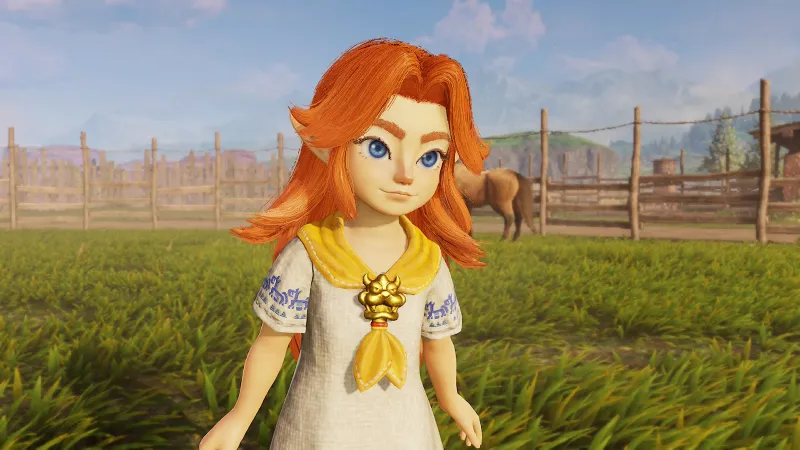
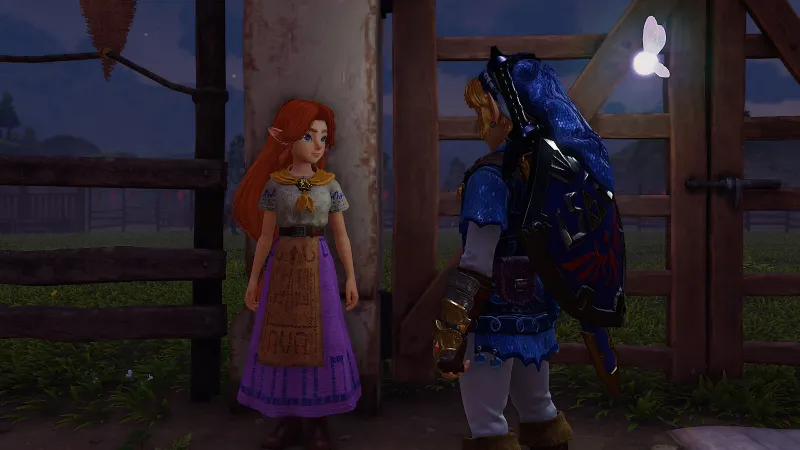
The Hyrule Castle portrait references to Yoshi and Mario are gone (though Mario and Luigi are still kind of in the game in a way), but Bowser gets a pass for some reason. Both Malon and her dad, Talon, are still wearing Bowser pins on their clothes. And unlike the N64 game where the detail was a little vague, there is no mistaking it here.
The Gossip Stones Are Still Weird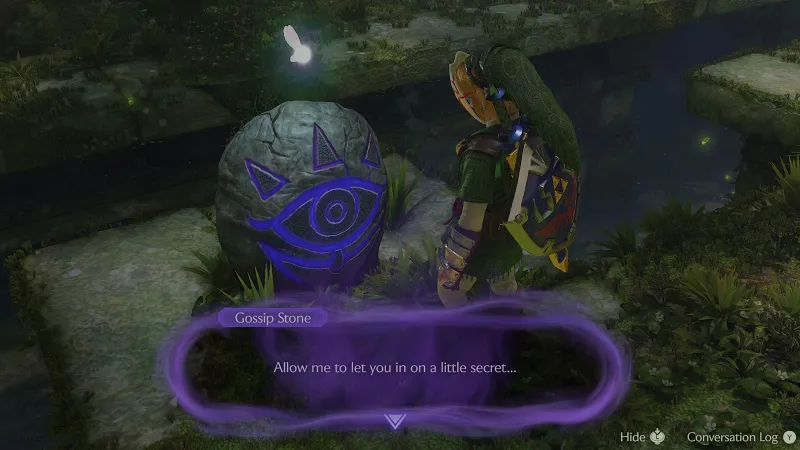
Gossip Stones are all over Ocarina of Time and it takes a while to understand what they do. If you hit them with a sword, they tell you the time, and if you play Zelda’s Lullaby near them, they refill your magic. If you do the Happy Mask Salesman’s side quest, interacting with them while wearing the Mask of Truth offers little hints and details about the world. But then there are interactions that are just odd for no reason. Blowing up a bomb near a Gossip Stone still makes it take off like a rocket ship, and using the Megaton Hammer still flattens them for a moment like a Looney Tunes.
Zelda’s Lullaby Still Fixes Signs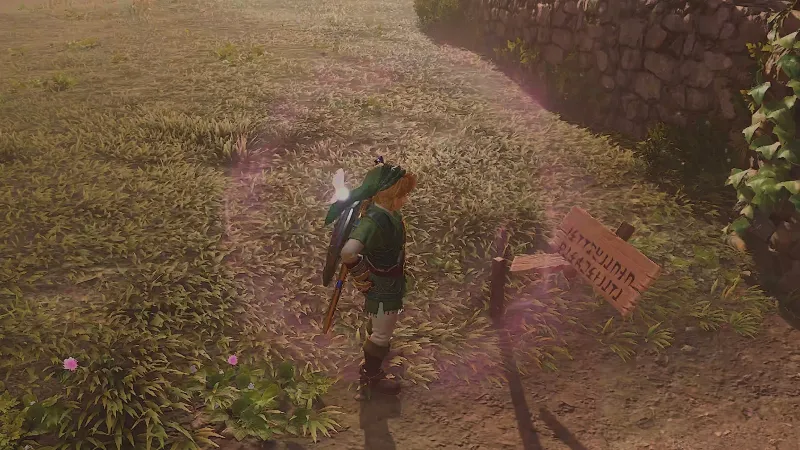
And speaking of playing Zelda’s Lullaby for inanimate objects, if you slash a sign to pieces with your sword and regret your words and deeds, you can play the iconic tune to make the signs reform and become readable again.
No More Skyward Sword Art
This detail was exclusive to the 3DS remake of Ocarina of Time, and surprising no one, it has been removed. Ocarina of Time launched in June 2011 and Nintendo released Skyward Sword about five months later in November. For… marketing purposes, I guess, Skyward Sword art could be found in Lonlon Ranch, the Bombchu Shop in Hyrule Castle Town, and the Gerudo Fortress. It was a fun Easter Egg to discover back in 2011, especially since Skyward Sword was still months away, but these days it’s a bit of an odd inclusion.
The "Mario And Luigi" Ghosts Are Unchanged
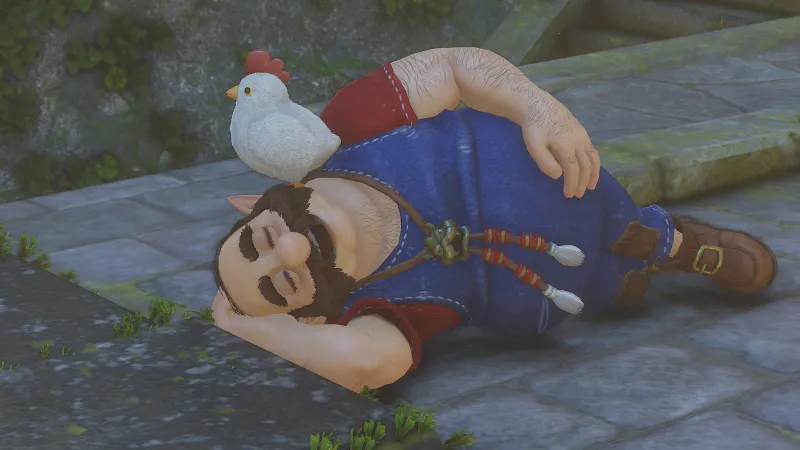
Though never explicit, the composer ghosts guarding the Sun’s Song (and Link’s first ReDead encounter) have always been assumed to be inspired by Mario and Luigi. They are brothers; Flat is short, squat, and red; Sharp is lanky and green. They still appear in Ocarina of Time this way, which isn't surprising, since they are important characters you must meet to get a very useful song. Fans have also speculated that Talon and Ingo are Mario and Luigi-inspired for similar reasons, but it’s worth noting that they are not brothers.
No More Inappropriate Hookshotting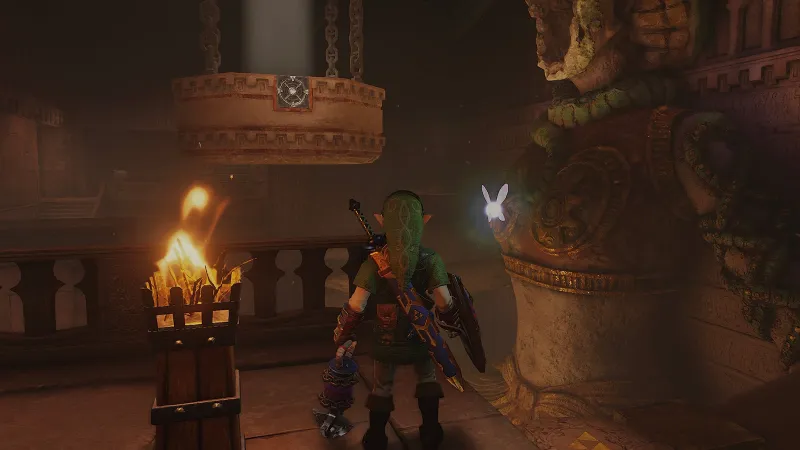
In the Spirit Temple there is a large statue of a woman and for reasons that have never been explained, Link could attach his hookshot to her breasts. It served no purpose. It didn’t help solve a puzzle. If anything, it was confusing. But we all tried it and there is no shame in admitting it! That was removed for the 3DS remake, and it remains removed in 2026.
Koroks In The Lost Woods (Kind Of)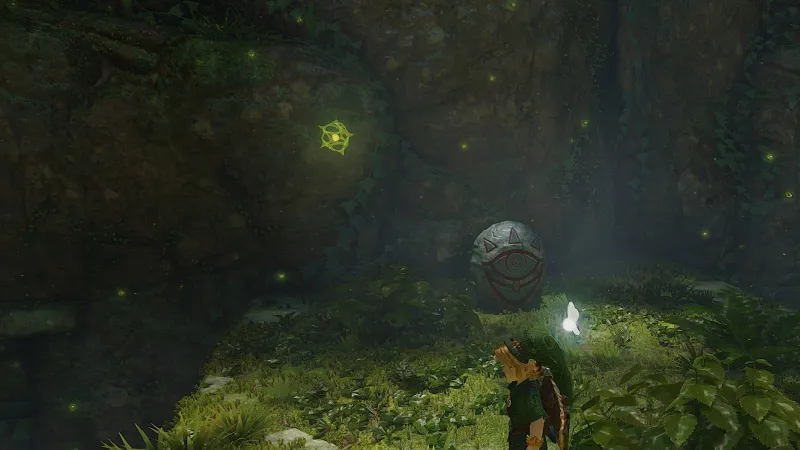
This is a very subtle reference to Wind Waker/Breath of the Wild/Tears of the Kingdom and is potentially the only addition to the remake that looks toward the future of the Zelda franchise. Obviously, plenty of characters in Ocarina later appear in Majora’s Mask (another remake of that is hopefully being considered), but it would be inaccurate to call those intentional Easter Eggs.
However, in Kokiri Forest and in the neighboring Lost Woods, the magical debris floating in the air often resembles a Korok as it would later appear in the series. It makes sense, too, because the Koroks are meant to be what the Kokiri transformed into following The Great Flood.
For more on the Ocarina of Time remake, you can find our review here. You can also find our interview with the game's producers here.
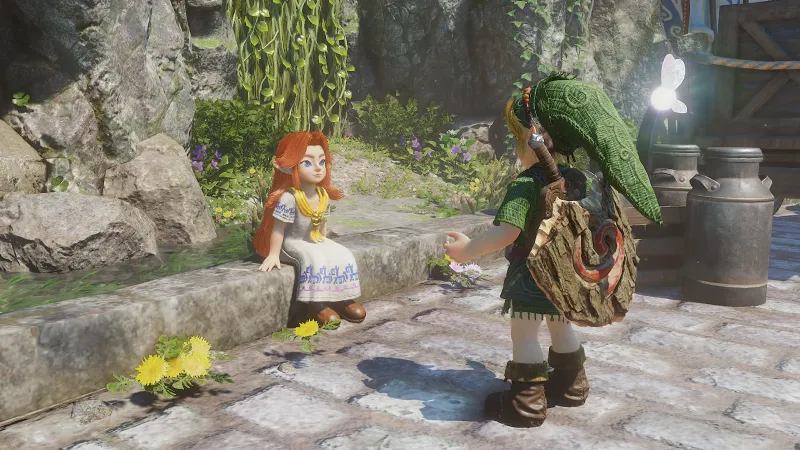
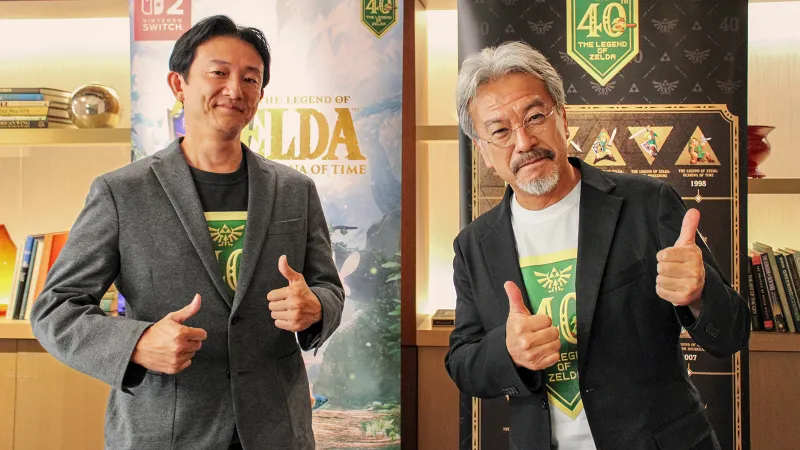
Today marks the release of the remake of The Legend of Zelda: Ocarina of Time for Switch 2. You can read my full, positive review here. Ahead of the game’s release, but after having played the game to completion (well… 99% as you will learn below), I traveled to New York to speak with Zelda series producer Eiji Aonuma (whose work on the original Ocarina of Time marked his first involvement with the series) and Ocarina of Time remake producer Hidemaro Fujibayashi (director of Breath of the Wild and Tears of the Kingdom among other Zelda titles).
Topics include how the team approached remaking Ocarina of Time, what needed changing and what needed to stay the same, their thoughts on the Easter Eggs from the original game, the fate and marital status of the Bombchu Bowling girl, and more.
The discussion covers a fairly faithful remake of Ocarina of Time for Nintendo 64, which launched nearly 30 years ago, but I have spoiler-marked certain questions and answers that might be considered sensitive if you want to maintain surprise when playing the remake yourself.
Mr. Fujibayashi, what is your relationship to Ocarina of Time?
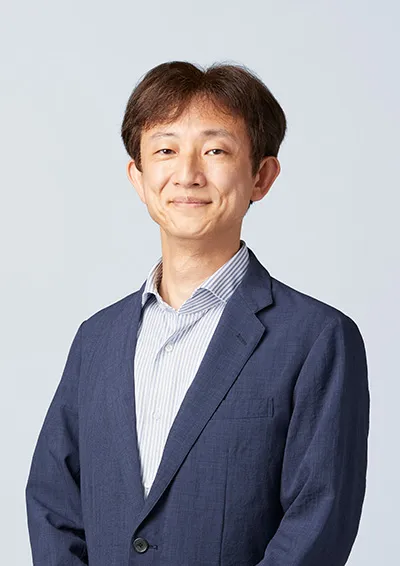 Hidemaro Fujibayashi
Fujibayashi: Regarding the original Ocarina of Time, at the time I was working for a different company, so it was mainly me as an end user trying to looking forward to the experience of what a 3D Zelda is going to look like. So, really, I was just waiting in anticipation for that.
How long has the remake been in development?
Aonuma: It's actually kind of hard to say exactly when development began because the earliest thought process was us thinking about the 40th anniversary of The Legend of Zelda approaching, and so we started to have this conversation, “Oh, what should we make to mark this occasion?” And then at that point, we decided on Ocarina of Time, and so a lot of time elapsed from the beginning of that conversation about the anniversary until we got to Ocarina. So it's hard to pinpoint exactly when the development itself began.
Was this a more relaxing game to develop after making Breath of the Wild and Tears of the Kingdom back-to-back?
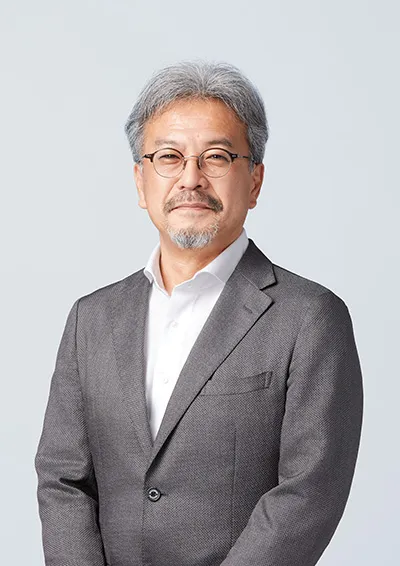 Eiji Aonuma
Aonuma: Was it relaxing? That's kind of a hard question to ask. I would say it's more a different style of development. So, if we looked at Tears of the Kingdom, Breath of the Wild, these were created as new games with a very different kind of development cycle. Whereas for a remake like this one, we decided to take an interesting approach, which is to bring in this new younger staff and find out what they would bring to this project in terms of their own experience, their own interpretation as newer staff.
And so my role here was really advising them on this, and it's not always like the development cycle of a new game. But in one sense, the producer has to be careful not to advise too much, to say that you must do it like this. You don't want to prescribe the approach that anyone is going to take. You want to make sure that there's enough space for these younger staff members to have their own interpretation, their own approach to it.
Do you have remake philosophies or rules, like what needs to stay the same and what should change?
Fujibayashi: So, in fact, there were pretty clear kind of rules or guidelines, as you said. First, is because you know, as Mr. Aonuma had mentioned, where he wanted to, the development team was centered around the young directors that took part in this development. And when we first started discussing what kind of game and what kind of approach you wanted to take. One thing that really came through and we clarified was, as you mentioned, what are we going to change and what are we going to keep the same.
And I'll start with what we wanted to change, and that was really to make sure that – because we have the ability to use the latest technology through the Nintendo Switch 2 – there's a lot we can change and improve upon, such as you know obviously things like controls, graphics. We also have a new controller, so that allows for the new camera controls. And we’re really able to fine tune and polish the feel of the game and there was excitement for all the ways of expression we can provide the player.
But on the other hand, thinking about what we didn't want to change, we were thinking about the creators of the original Ocarina of Time, and what they wanted to convey, the experience that they wanted to provide for users and players through this title. That's something that we wanted to keep intact and that spirit to carry across. And we wanted to make sure that this new game is able to deliver that in the way that we wanted them to.
Aonuma: So speaking as someone who worked on the original Ocarina of Time for Nintendo 64, you always have those moments looking back of, “Oh, you know, I really wanted to do more of this,” or, “I wanted to be able to express this in a different way,” but you're faced with certainly the tech limitations of the time. And I went on from Ocarina of Time to work on other Zelda franchise titles, as well. And with each new title, you're always looking for a new way to express something that may not have been available to you previously. But you always have to keep in mind is what makes a Zelda game special, and how do we protect that? How do we keep that in store for the players, as well. So, on this project in particular, I had to think of that through the lens of how do we protect the things that make it the Zelda Ocarina experience, but also how do I give the freedom to the staff to find their own expression of these ideas? And I think between those two things, we found a really good balance. So I'm very happy about that.
When we interviewed you, Mr. Aonuma, for Game Informer’s Breath of the Wild cover story, Shigeru Miyamoto was present, and he made a joke about the challenge of the water temple. Are you happy with where the Water Temple is now in the remake?
Aonuma: Certainly, looking back on the challenge level of the Water Temple, I think it was hard, but some of that came from the system that we were presenting to players. So, for example, if you look at the way that players used to have to switch to the heavy iron boots so that they could sink in the water, you had to go to a different screen and press the button. But now that we're able to give players a shortcut, single button on the gameplay screen, I think they can get to that more quickly. It's a better experience because they can focus on solving the puzzle rather than having to navigate menus and thinking about that and interrupting the flow of their thought each time.
Another consideration compared to the original is that you couldn't move the camera angle in the original game, and so if you were looking for a certain room in this 3D space relative to where you are now, it was much more difficult to orient yourself and think about the space where that room might exist. So I think those two together, you know, also with the heavy boots being one button press, I think this, for me, is the best version of the Water Temple.
Is the canon of the Zelda timeline considered at all during development? Did you think about adding in Easter eggs that made references to things that would have happened later in the Zelda story? Like Wind Waker taking place after Ocarina of Time, for example.
Aonuma: It's funny because the staff would sometimes ask me about the possibility of including nods to the timeline or references to the other game, and I actually, at the time, would say, "No, let's focus on this game. Let's make this the best version of Ocarina of Time that we can." So, the timeline was in the back of our mind, but we didn't consider taking an approach to this game where we actually, explicitly included references like that.
When testing the game, was it challenging to find people who had never played Ocarina of Time?
Aonuma: As it turns out, both on our staff and in the testing teams, there's a lot of young people, and many of them had never played the original. So it wasn't a challenge to find them.
Who do you primarily consider this remake to be for? New people who have never played Ocarina? Or fans like myself who consider it to be, frankly, their favorite game. Who is the important audience?
Fujibayashi: The answer is both. Our response to those fans who have fond memories of this title is really what I mentioned earlier: being able to provide the experience of what it was like to play Ocarina of Time back to them, and that was our response to them. And when it comes to the players that are experiencing this for the first time, whether it's the graphics, or the controls, or the ability to shift and move the camera; those are all changes and fine-tuning that we've made to make sure that people who are used to modern gaming are able to enter this experience with as little friction as possible. So again, to answer your question? It's really both.
Aonuma: Certainly, when you look at the original The Legend of Zelda: Ocarina of Time, there is so much hidden in the world that people spend a lot of time looking for things. And your first time playing through, you may not find all of it in one go. People in that kind of situation would refer to strategy books and information that they can find.
For example, when you're looking for the like last Skulltala and you already have 99, our job is to think about how to give the player an approach to that sort of a problem. What kind of information can we give them to help out. To make it a fun, but still challenging experience, because we want even new players to come in and to be able to fully experience this world that we've created for them, even though old fans are going to come in with a little bit of an advantage in the form of a lot of prior game knowledge.
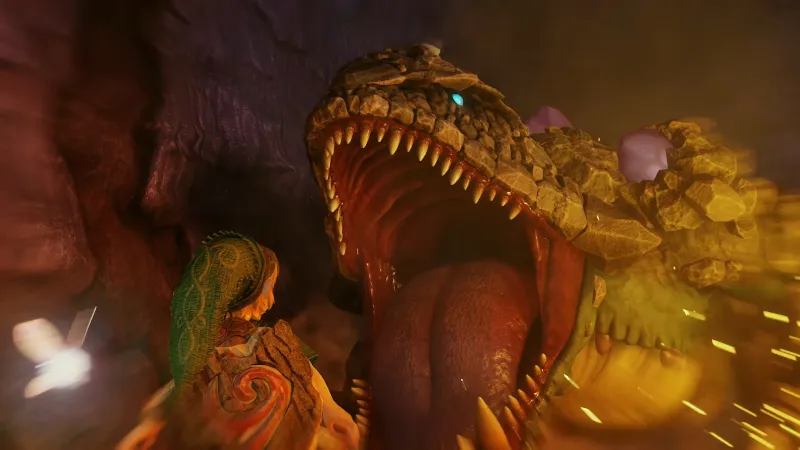
I'm not kidding about needing some help with that final Skulltala. I'm going to hand you my Switch 2 after this so you can show me where it is because it's been driving me crazy. I've been having dreams about where the final Skulltala might be.
Aonuma: [Laughs]
Fujibayashi: [Laughs]
The end of the game in the remake made me emotional in a way I wasn't expecting. It made me cry, just the whole ending of the experience overall. Were you expecting that kind of reaction from players?
Fujibayashi: So first, I want to say I'm very, very happy and excited to hear you say that because, as you mentioned, that cutscene – cutscenes in general – but that cutscene specifically is something that we, as a dev team, heavily discussed. Because of the limitations of the technology back in the day, there might have been things that we weren't able to convey fully, whether it's because of the tempo of the game… whatever it is. And so, when we approached this remake, we wanted to make sure that we captured that moment in the way that we wanted to express it. So that the right kinds of emotions are evoked, and that we can convey the emotion and the story that we wanted to at that moment. And now that hearing you say that and kind of having that reaction really struck a chord? I'm really relieved to hear that because that's exactly what we wanted to do.
You’re relieved that you made me cry?
Fujibayashi: [Laughs]
The ReDeads, the Shadow Temple, the Dead Hand miniboss, Wall Masters – these enemies traumatized a whole generation of kids. I'm curious if that was always the intention and how did you approach making sure that those elements still remained scary? Was there a line that was too scary?
Aonuma: Certainly, at the time, we had this intent to make sure that we allow the players to find the enemies a little bit scary. They have to be, right? We want to express that sort of thing. But more than anything, they are part of this Fantasy world, which has both light and dark portions, and so we're trying to bring that feeling across. It’s not that we're trying to scare people outright as the entire intent, but rather show that you know Link is part of a brighter part of the world where people are friendly, and Ganon is a part of the darker part of the world where there's a lot of scary things. And we kept that in mind in the remake as well.
We wanted to make sure we were bringing that out, but the tools that we have available to us now for expression are so capable that if we really tried, of course, we could make something that was very, very scary. But this is supposed to be for all kinds of players. We didn't want to hit the scary notes so strongly that we were putting off new players or younger players, and so we want to have that tuning very carefully in mind as we're making those adjustments in terms of presenting that final expression in the game.
I shudder to visualize what the scarier versions of the ReDeads might look like.
Aonuma: What was your experience of them this time?
Oh, terrifying! That noise. The noise they make. That scream. I feel it in my chest. It just recalls that scariness of my childhood in a way that I admit is very entertaining, and I like. Do you remember recording that sound effect? How did you do that? Did you have someone scream?
Aonuma: Sorry, I don't recall [laughs].
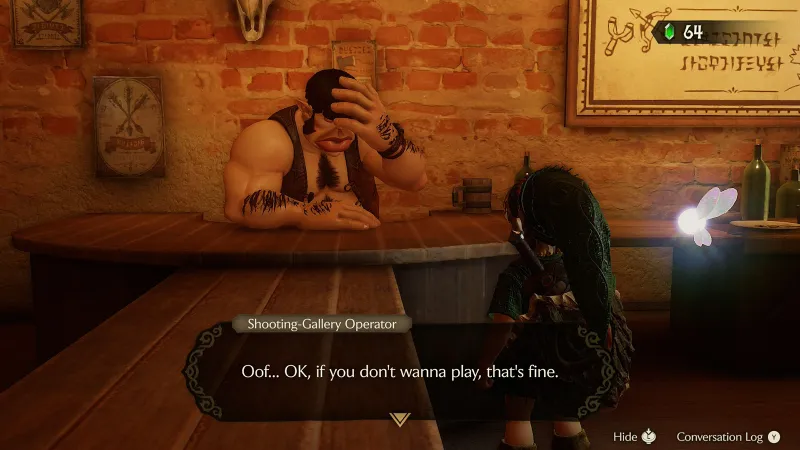
For the remake, a lot has been rewritten. The meaning hasn't been changed dramatically, but pretty much everything has been rewritten. What was the goal with the rewriting overall?
Fujibayashi: Yes, it's as you said. We did a lot of rewriting of the text. When it comes to the original Ocarina of Time, there's the idea that because it was 28 years ago – it's a long time ago – there's the turn of phrase, or the way it's been written, is sometimes not clear or doesn't work in the modern day, given the context of the modern day. And so that's why we wanted to make sure that it makes sense and it's easier to understand for people who are familiar with playing modern games, and also that it works better here.
And when you think about… obviously the graphics have been improved significantly. Before we had to do things like… “That blue ocarina that is the size that you could fit on a hand,” something like that, to make sure that the idea gets across to the player. But now, because the graphics are improved, it's very clear what the size it is. It's very clear that it's a blue ocarina. So with the new graphics, if you go through the wordy explanation of what it is, the player is going to be like, "Yeah, I can see it." So in order to make sure that we remove those kind of slight hurdles and really make sure that we can present the game and improve not only the expression but also the pacing of the game? That's something that we really took into consideration as we were rewriting the game.
I wanted to ask about some specific changes for the remake. You get five bottles now. Why?
Aonuma: Because bottles are so important to the way the player plays the game, like looking for strategies to deal with different kinds of situations, even at the time of development of the original title, I thought, “Oh, you know, I could do with even just one more bottle.” I think certainly when you collect all four in the original, you feel great about that at time. But I was still thinking like one more would be okay, right?
So, all this time that was in the back of my mind. But when the new younger staff were familiarizing themselves with the old game and thinking about what they might want to change in this version, one thing that I suggested was that the player could get their first bottle earlier, and this would actually be really useful in terms of reinforcing for the player how helpful bottles were and motivating them on their quest to find the next bottle. It strengthens that whole sequence through the game by changing the order just a little bit there. But yeah, certainly, once you have a certain number of bottles, you're going to feel a little bit more confident and more comfortable. But reinforcing that feeling early on, I think, was important for us in the development of this one.
In the original, there were Nintendo character portraits in Zelda's courtyard of Mario, Yoshi, and more, but those have been removed. I was curious as to why.
Aonuma: Certainly, at the time, when we put those there, I don't think anybody thought it was too big a deal. Maybe there was a more carefree or comfortable approach to that sort of thing. But looking at it now, like if a player is coming through that area, and given the overall way that we're, you know, creating this world and giving the player that form of expression, if they look up and they think, "Why is Yoshi there?” We don't want that moment to interrupt their experience of the world in that way. So we're feeling a little bit differently about it this time.
However, you will remember that there is one design element on Talon with Bowser on it, and that's part of the original design of the character. So we didn't change that. That stays as is.
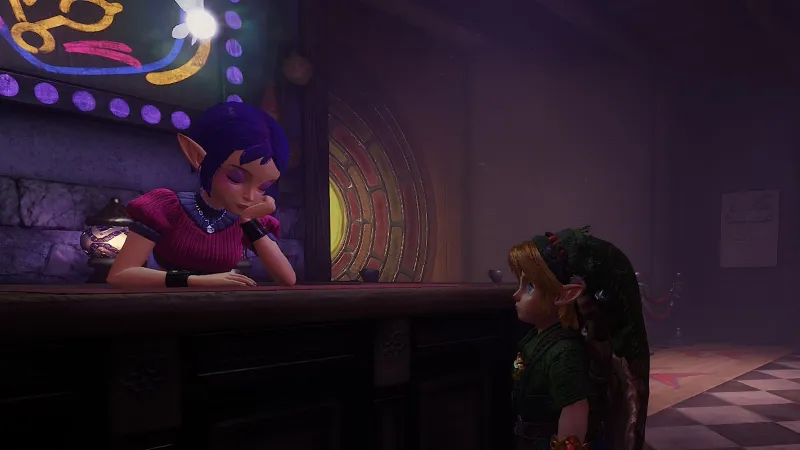
I have some short-answer questions. The woman who runs the Bombchu Bowling game. What happened to her after seven years. And is she single?
Aonuma: That's something we're not going to touch, and I'll leave it to your imagination.
One of the Skulltala rewards is Bombchus, which I found disappointing when I was young, and I found disappointing as an adult. Why does he give you Bombchus?
Aonuma: So that feeling you had when you got, as a reward for a certain number of Skulltalas, the Bombchus, and you thought, “Wait, that's it?” That's also part of the original experience of the 64 version. So there, there's an approach that we take where we try to keep all of the different notes that people felt in the original game in place. You know, sometimes it's really remarkable, fun things, and other times it's slight moments of disappointment. Even that could be memorable in that way. It's important to maintain that.
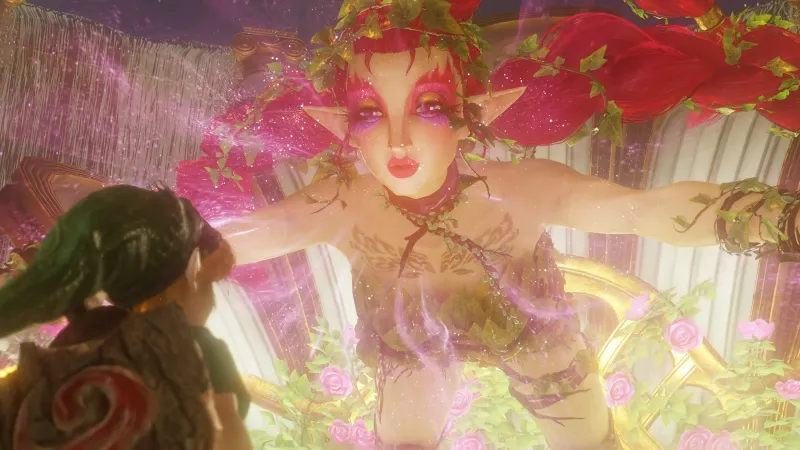
The Great Fairies. What do they need rupees for?
Fujibayashi: You know, it's really about a feeling. It's like in Japan sometimes, like donations to a temple or something similar like that. It's to express your reverence for the great fairies.
The 3DS remake had Skyward Sword art hidden in a couple of places, but you removed it for this remake. You didn't want to keep the Skyward Sword art?
Aonuma: [Laughs] I do remember at the time the designers on the 3DS version were really interested in placing Easter Eggs like that throughout the game, and the timing of the release of Skyward Sword was such that it was perfect to go ahead and include that. So I said, “Okay, sure.” But like earlier when we were talking about in the courtyard sequence with the Yoshi portrait. You know, you don't want to interrupt the player's experience by seeing something that's unrelated to what they're currently doing in the game. So for that reason, we decided not to go that way.
Mr. Fujibayashi, you directed Skyward Sword. Were you sad to see that reference removed?
Fujibayashi: [Laughs] No, it’s really as Mr. Aonuma said. There was an underlying concept in what we were going for, so no hard feelings there.
I think the biggest cutscene change in the game is when Link transitions from child to adult. It is now a much more involved sequence. Why did that scene need such a drastic change?
Aonuma: So I think that's really connected to the way we were thinking about expressing things in the original. We couldn't do everything. We couldn't express everything that we'd like to, and I think in that moment where you have Ganondorf having this reaction to Link becoming older, that cutscene in the original, it was very low on explanation.
So, you have these thoughts in the player's mind like, “Oh wait, why is he there? What's the relation to this process?” So, you want something that explains his presence, that explains his reaction to make a bigger impression on the player overall, and that's something that you can use to connect the motivation to want to face Ganondorf in the final fight. Something that I think comes across better now.
[I pulled out my Switch 2 and showed them how I was missing one Skulltala in Hyrule Field]
Aonuma: [Laughs]
Fujibayashi: [Laughs]
You can see here I have 99 out of 100 and am have two out of three in Hyrule Field. Can you point to a general location to give me an idea of where to look?
For Game Informer's review of The Legend of Zelda: Ocarina of Time (2026) follow the link.
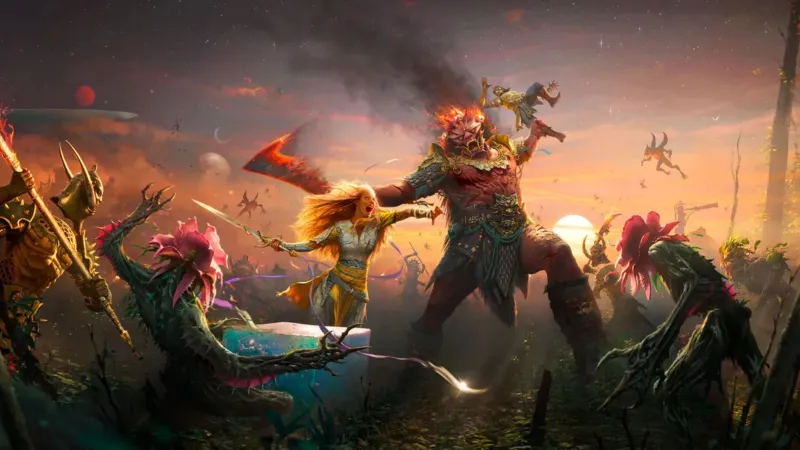
PlayStation first-party developer Santa Monica Studio has delayed its upcoming action game, God of War Laufey, to May. More specifically, the PlayStation 5-exclusive title will now launch on May 20, representing a roughly three-month delay from the original February 16 release date.
"Since the reveal of God of War Laufey in June, we've been deeply grateful to see so much excitement for Faye's journey through the Everywhen," a statement from the studio reads. "We don't take for granted the trusted place in the studio to make an extraordinary experience worthy of the passion and dedication of our fans. With this in mind, we've made the decision to delay God of War Laufey's release to May 20, 2027. We will make the most of each moment until then by putting in the finishing touches and pushing the game to its fullest potential. On behalf of everyone on the team, we appreciate your patience and we'll be back to share more updates soon."
God of War Laufey stars Faye, Kratos' deceased wife from his Norse adventures, after she ends up in the mysterious realm known as the Everywhen following her death. There, she will fight monsters and creatures from various mythologies alongside a talking gelatinous cube and a talking sword sash. We'll have to wait a bit longer than expected now to see what her adventure entails.
God of War Laufey will now launch on PS5 next year on May 20. In the meantime, check out this newly revealed weapon, then read about how Amazon's God of War TV series has recast Kratos as Dave Bautista.
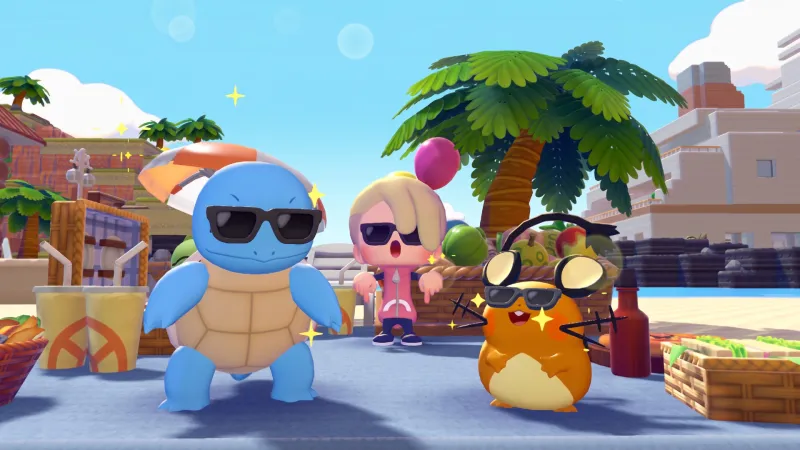
The Pokémon Company has revealed that part 2 of the Pokémon Pokopia Expansion Pass, Dazzling Decorations, will go live on Nintendo Switch 2 next month. More specifically, the Dazzling Decorations expansion will launch on December 9, bringing all kinds of accessories to dress up your Ditto and match other Pokémon.
To play the Dazzling Decorations DLC, your version of Pokémon Pokopia must be running the free 3.0.0 software update, and you must have completed the important requests, "Raise the environment level!" and "Rebuild the Pokémon Center!" in Withered Wasteland. You must also have completed Drifloon's request, "Find a doll!"
"Look your best by wearing accessories with your Pokémon friends," the expansion's details read. "Meet new friends and add some flair to your surroundings with new furniture and more Pokémon. No new town will be introduced in Part 2."
Dazzling Decorations follows the Bubbly Basin expansion, which went live over the Summer, and precedes the unannounced Part 3 of the Expansion Pass, set to go live sometime in 2027. The Pokémon Company says Part 3 will bring a new town to explore and rebuild to Pokémon Pokopia.
While waiting for Dazzling Decorations to go live next month on December 9, read Game Informer's Pokémon Pokopia review. After that, check out the reveal trailer for the next generation of pocket monsters with Pokémon Winds and Waves.
What Pokémon do you want to see added to Pokopia as part of Dazzling Decorations? Let us know in the comments below!
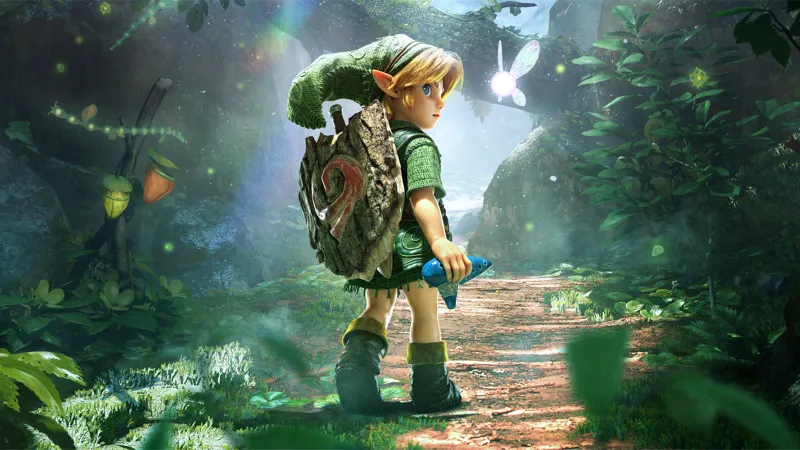
Reviewed on: Switch 2 Platform: Publisher: Nintendo Developer: Nintendo Release: November 5, 2026 Rating: Everyone 10+
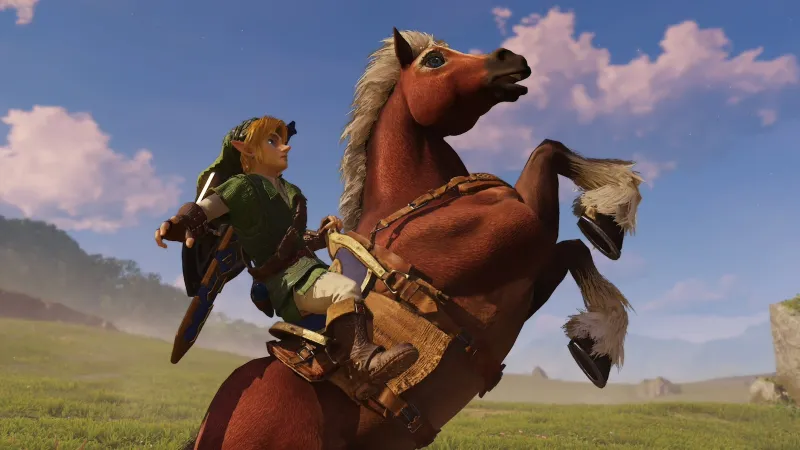
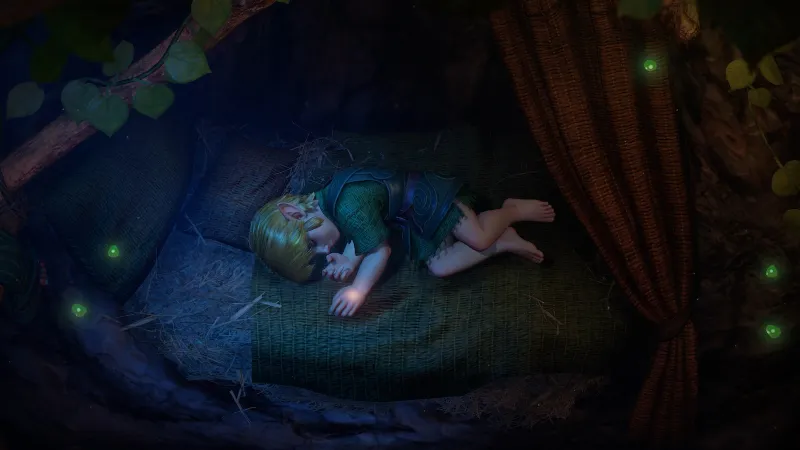
The Legend of Zelda: Ocarina of Time for the Nintendo 64 is the most important video game ever made… to me. My byline would not appear in the pages of Game Informer without my original experience playing that game. But it is nearly 30 years old, and despite establishing many important staples of 3D gaming, its age is becoming more apparent. Ocarina of Time was due for a re-examination, and its remake is a wonderful recreation of the 1998 experience with improvements on basically every element: visuals, storytelling, timeless design, and more. It is, however, a remake, and the coloring (though expertly done) is firmly inside the lines.
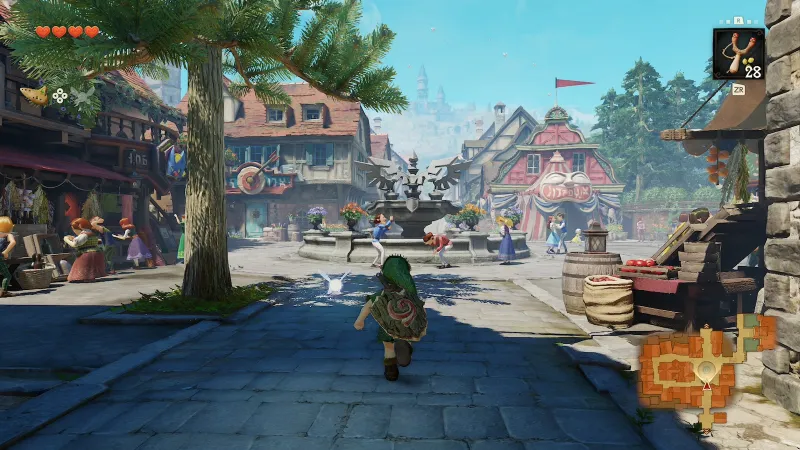
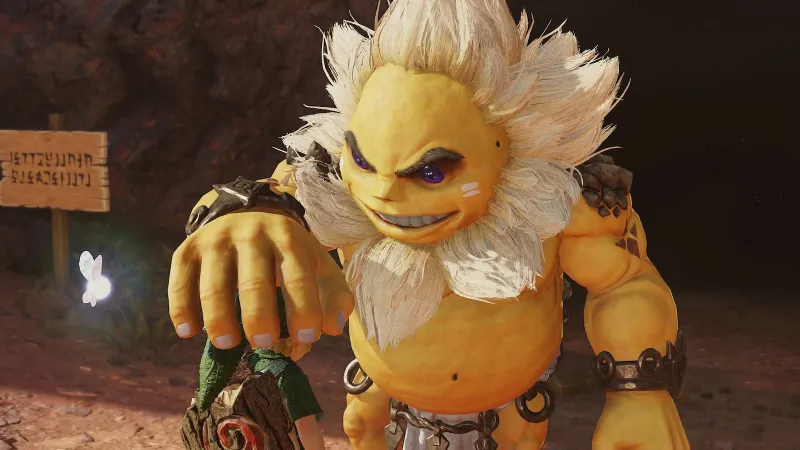
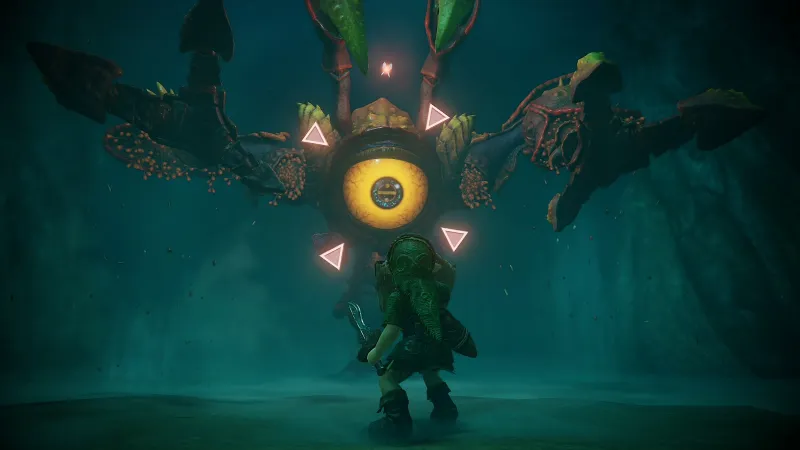
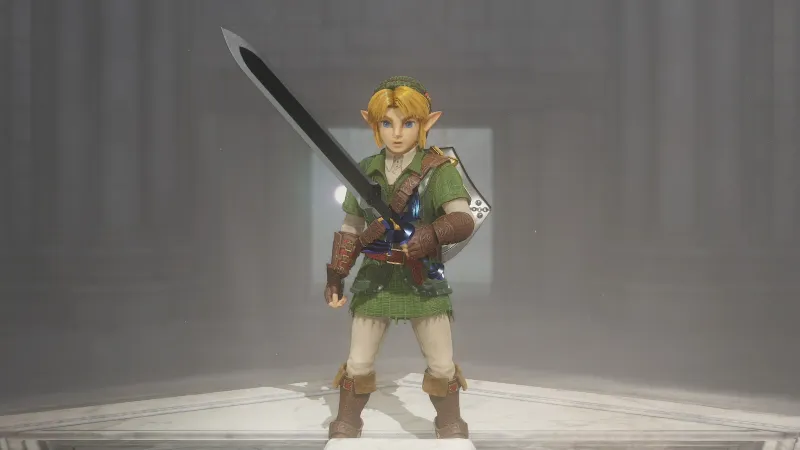
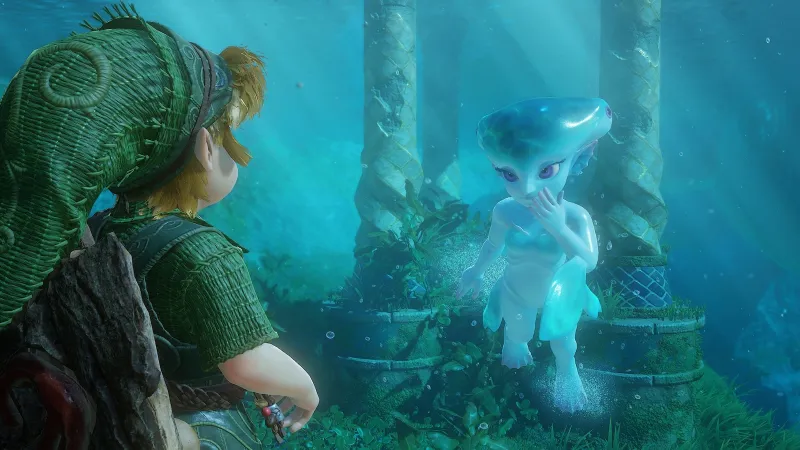
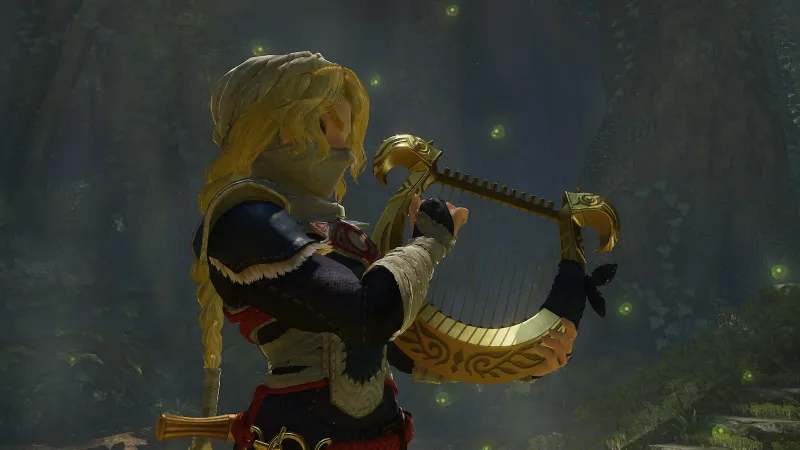
Zelda: Ocarina of Time Remake – Video Review:Ocarina of Time is gorgeous. That the game is less than 25 GB is an engineering marvel. I never quite came around to the odd looks of child Link or Zelda, but every other character, environment, enemy, item, and boss looks incredible. I eagerly looked forward to meeting every weirdo in Hyrule to see their new look, and was never disappointed. The ReDeads and Stalchildren are more traumatic than ever, and every NPC childhood crush I thought I had moved on from was reignited. Watching the sun rise and set over Hyrule feels as magical as it did in the past.
The same accolades can be awarded to the soundtrack. The new orchestrations are incredible, and watching Link’s 4K fingers play the proper notes on his ocarina is mesmerizing. Nintendo continues to fumble voice acting with stiff performances, but thankfully the vast majority of dialogue – one of the primary changes in this remake – is not spoken. Characters don’t necessarily have more to say, but what they say is more impactful, and there are a handful of small but exciting expansions to character and story details. Nothing is groundbreaking or changes how you look at familiar elements, but it manages to be simultaneously nostalgic and improved.
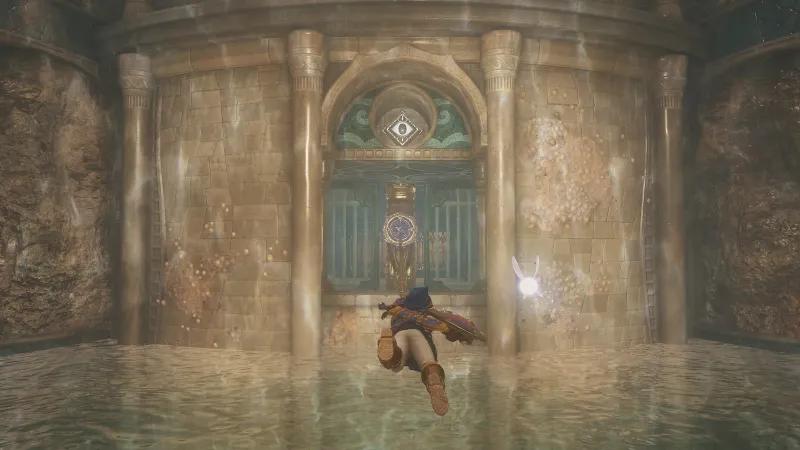
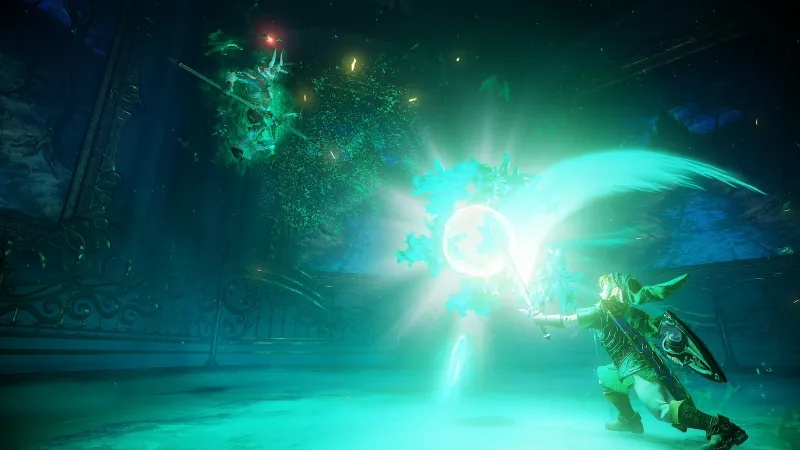
And that’s the closest I got to what I would debatably call a problem: It all looks new, but doesn’t feel particularly new. Ocarina’s overall design holds up. The time travel element is surprising and creates great opportunities to see the world change and evolve; puzzles and their solutions are rewarding; the basics of combat, though simple, are thrilling. All those elements have been adjusted, but not overhauled. Dungeons and their puzzles have been tweaked to remove annoyances (such as fewer keys in the Water Temple), and the new swordplay effects make connecting your blade to monsters feel incredible. But they’re all ultimately small changes that don’t cast Ocarina in a new light or consider its history. It’s a straightforward recreation. But an admittedly very good one.
The biggest, most impactful changes are the new full camera control and active jumping. Swinging the camera around to take a closer look at the upgraded environments is genuinely stirring, especially in the locations that used to be pre-rendered. There is an undefined and exclusive-to-video games emotion I experienced often while trekking locations I thought I knew so well, only to realize I have never seen or looked at it in this way, and I chased and captured that feeling all over Hyrule. Jumping may seem small, but it made me a more active participant in exploration. It also has the benefit of making some encounters feel somewhat trivial (turns out being able to jump over Blade Traps really diminishes their threat), and I was just fine with that.
The beautiful 2026 version of The Legend of Zelda: Ocarina of Time does not study the legacy or impact of the landmark game on the video game medium. Instead, it is a meticulous and incredibly impressive recreation of one of the best games ever made. I was rarely surprised during my playthrough, but I was incredibly excited to see old friends and I happily share without embarrassment that playing through its final hour made me cry. For many like me, the original Ocarina of Time is an impactful adventure that arrived at a time in their lives when magic still felt real. Playing the game again 28 years later and appreciating the care taken to maintain and improve that original vision was the ultimate surprise of the whole experience: I didn’t expect to be so moved.
 Score:
9.25
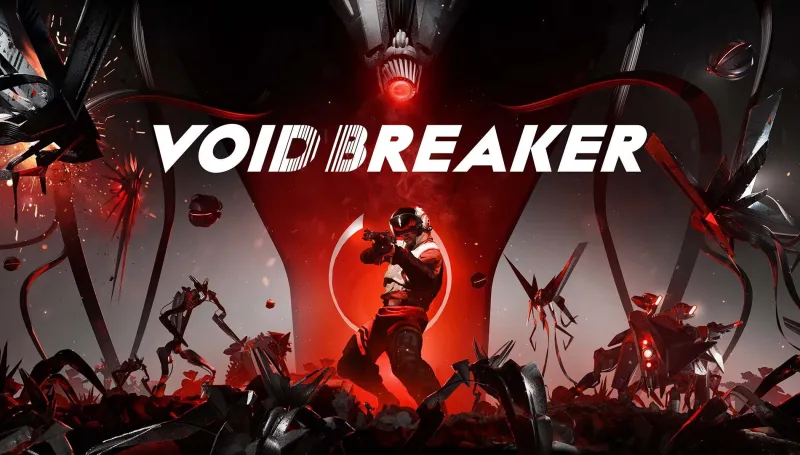
Reviewed on: PC Platform: PlayStation 5, Xbox Series X/S, PC Publisher: Playstack Ltd Developer: Stubby Games Release: November 4, 2026 Rating: Teen
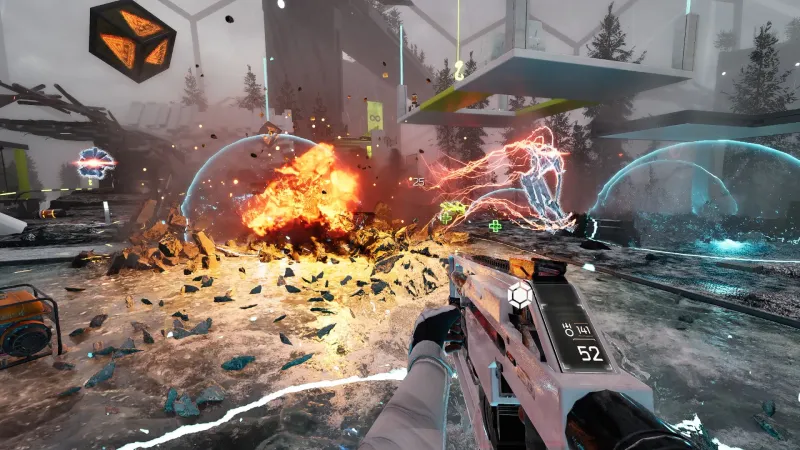
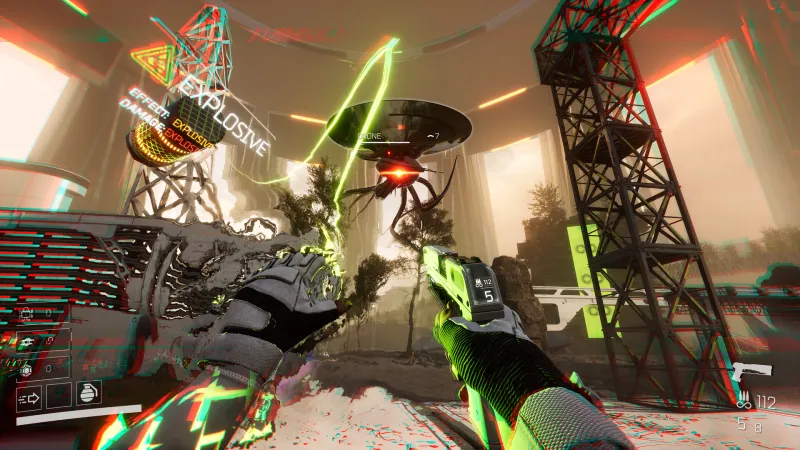
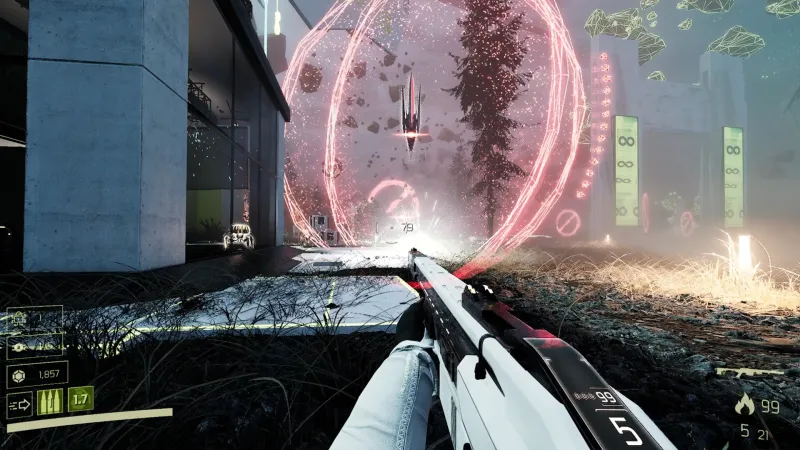
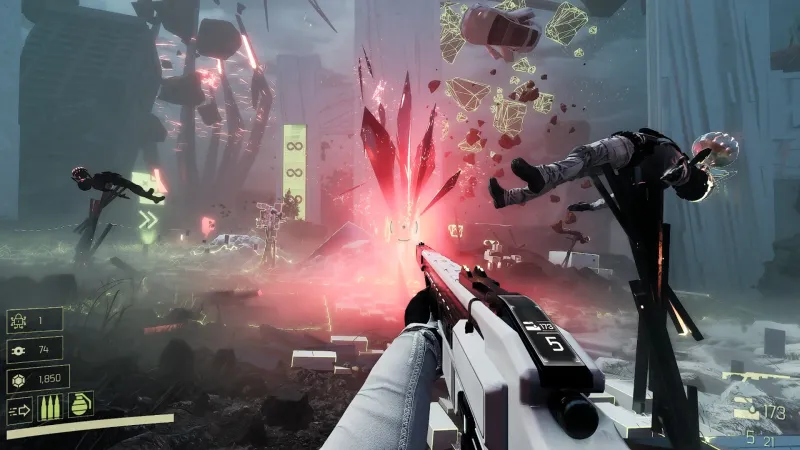
Many games tout impressive destruction systems under the hood, but few implement it as well as Void/Breaker. The ruin is visually spectacular, sure – who doesn’t love to watch buildings crumble because of your grenade or gravity-thrown explosives? But importantly, it’s a critical aspect of Void/Breaker’s roguelite design. Enemies caught beneath falling rubble become instantly staggered, and that’s your moment to kill. Grenades do this too, as do most items you throw at the hostile AI machinery trying to end your run, creating a vortex of shifting priorities as you dash, jump, and shoot at sequential staggered enemies in your sightlines. Countless weapon mods and permutations make fewer than a dozen weapons feel like hundreds in your arsenal, adding even more blissful chaos to the mix. Though it can be difficult at times, if you can see through the literal remains of your destruction, one of the year’s most engaging shooters awaits.
Void/Breaker wastes no time getting a gun in your hand. An AI voice in your head wants your help escaping a simulation where thousands of runners attempt to reach the end of multi-arena stages to defeat a boss. He asks that you simply follow the simulation’s commands; meanwhile, he uses the data you collect along the way to find new exits for you and him. The storytelling style is very reminiscent of Valve’s Portal. Something much larger is at play here, but it’s worth discovering for yourself.
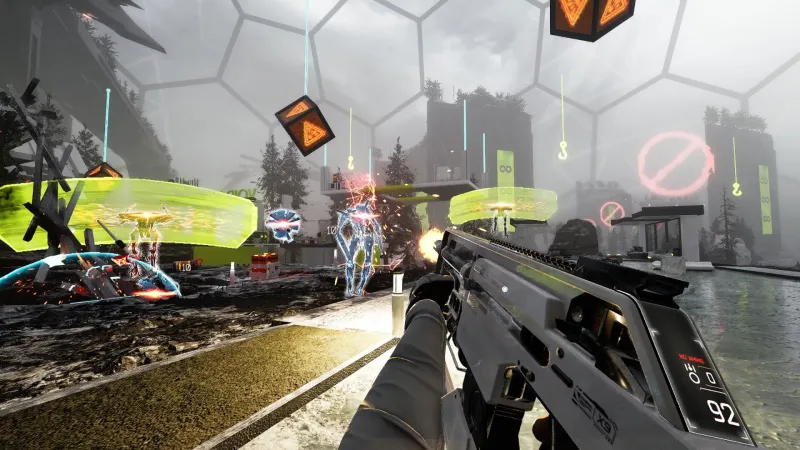
This narrative framework supports the game’s roguelite structure. Mechanically, however, you enter various themed digital stages, from liminal spaces to beaches to snow-capped cliffs and more, and attempt to survive. Most arenas consist of a couple of starkly white structures that your grenades and thrown explosives can topple (ideally onto waves of enemies below). Learning the language of Void/Breaker means constantly scanning your field of view for explosives and structures practically begging to come down, and then eyeing neon-green bars above enemies that tell you they’re staggered and ready for a quick kill. Developer Stubby Games throws plenty of wrenches into this formula, like armored foes and electrostatic enemies you must melee first, and elite bots that will have you on the back foot, but for the most part, Void/Breaker’s formula is “Break stuff, then kill.”
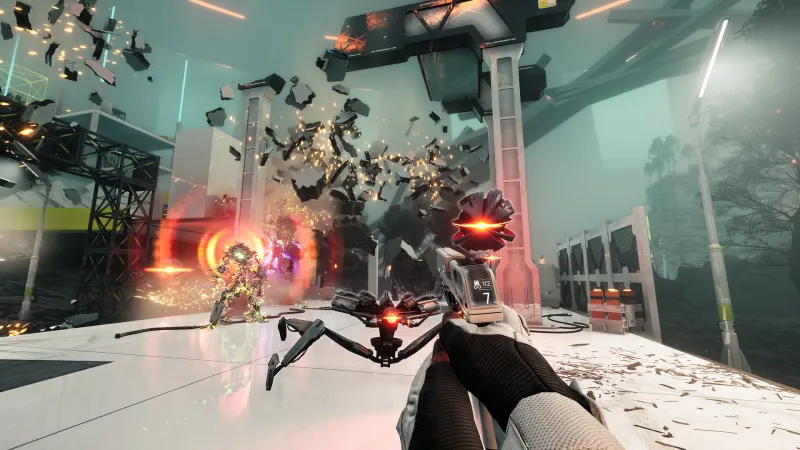
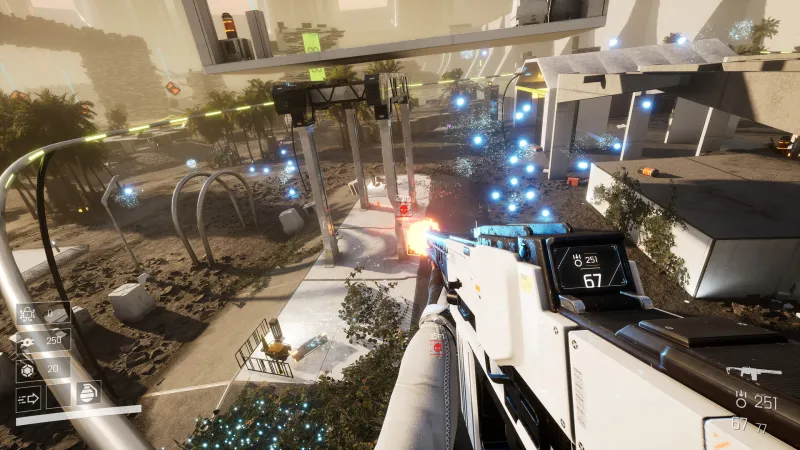
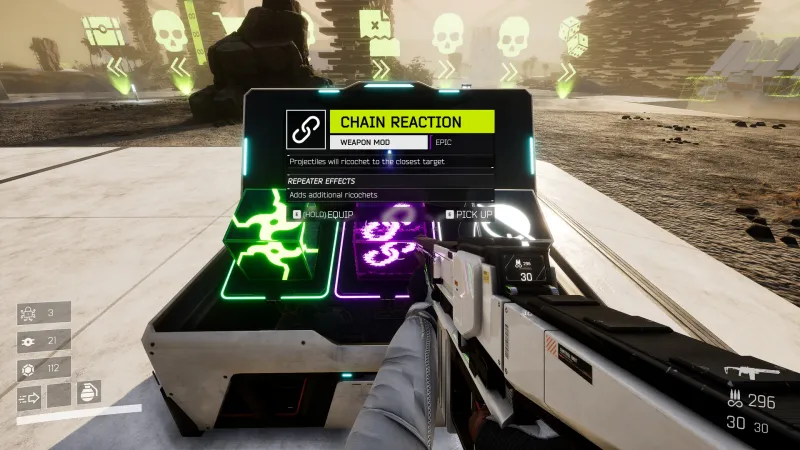
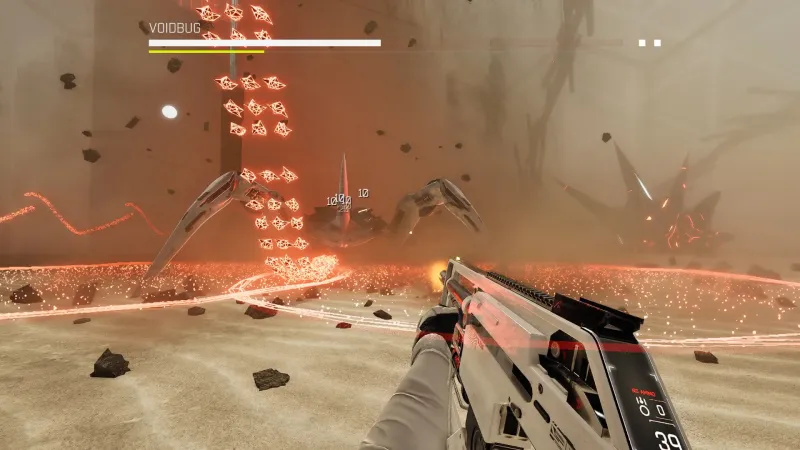
The game emphasizes explosives and bringing buildings down, but your guns do most of the killing; you can only select one weapon per run. You choose from a pistol, shotgun, machine gun, sniper, and more, and each has its perks (though once I unlocked the SMG, I rarely picked anything else). There’s no sense overthinking your weapon, though, because the dozens of mods you pick up each run determine its effectiveness. As you pick up more schematics, the pool of mods you find in chests or drop from enemies expands, and soon your gun fires corrosive acid, electricity, fire, projectile missiles, and more. Not to mention, mods change how the gun fires, how much damage certain bullets do, recoil, accuracy, and just about any other stat you associate with firing a video game gun. Wild combinations are easy to create, and a unique mod-stacking mechanic that can double or triple effectiveness adds a light touch of puzzle design to this otherwise straight shooter.
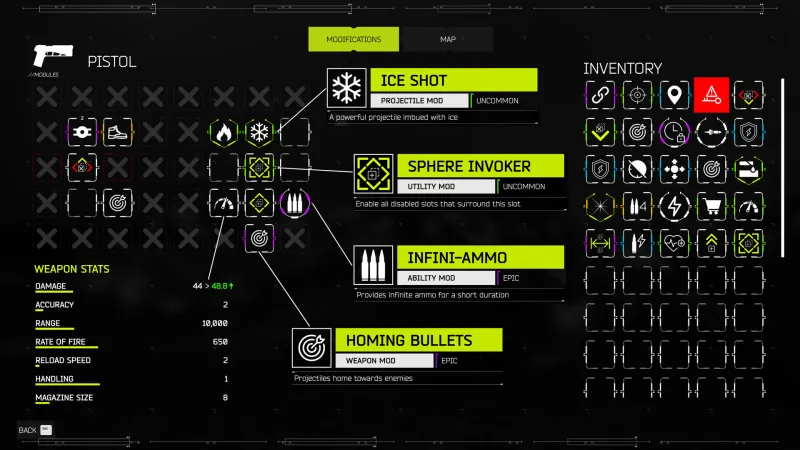
Stubby Games smartly emphasizes player expression, never getting in the way of the zanier combinations available to players. The SMG I used to beat the final boss featured mods that made each bullet electric, shot missiles with each shot, covered each bullet in a destructive orb, and featured a ricochet perk that made each bullet bounce off walls and split into even more bullets. I’m thankful for mid-run saves because this SMG permutation, paired with an ability mod that let me throw infinite grenades for a limited time, filled my screen with so much destruction that the entire game crashed. I’d usually bemoan such a thing, but I couldn’t help but laugh. I pushed my PC to its limit with my on-screen chaos.
Boss fights leave a little to be desired – I rarely died because of their simple bullet-hell arenas. Instead, most runs ended because, after bringing down every structure around me, I’d get so lost in the chaos that I wouldn't realize I was stuck in debris while enemies swarmed my location. As stunning as it is to see so much happening on screen, it can be hard to understand what is going on during the most chaotic moments.
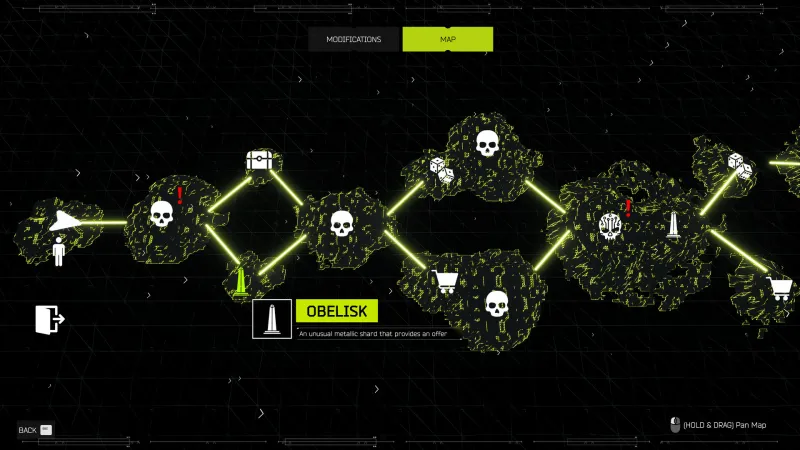
Between enemy-filled arenas en route to a stage’s end boss, you might find a shop to buy more mods, ominous obelisks with risk-reward propositions (gain a lot of health or lose half your health, for example), optional trials, and strange phenomena that transport you to different locations. These moments are quick breaks in between bouts of adrenaline-fueled shooter action that I always welcomed – enemies can be relentless, especially as new types are introduced in each stage.
The rest of the Void/Breaker package offers few genre surprises. You can upgrade various traits between runs, research new mod schematics to add to the random pool, purchase new weapons, and discover fun secrets. You can unlock shortcuts, glean in-world information from computer terminals, and hear intriguing dialogue barks from the AI partner who needs your help. It’s all standard stuff for the rogue genre, but if anything, its simplicity pushes you back to the meat and potatoes of this shooter.
Void/Breaker’s shorter runtime – I rolled credits at 12 hours – ensures nothing gets too repetitive in its roguelite structure, but an expansive endgame promises even more to engage with, like different run modifications you can enable to make an already chaotic shooter even more anarchic. I’ll certainly be running it back (again and again) to see what other disruptions I can bring to this AI-simulated adventure. It’s hard not to when destruction feels this good.
 Score:
8.5
RSS Error: WP HTTP Error: cURL error 60: SSL certificate OpenSSL verify result: unable to get local issuer certificate (20)